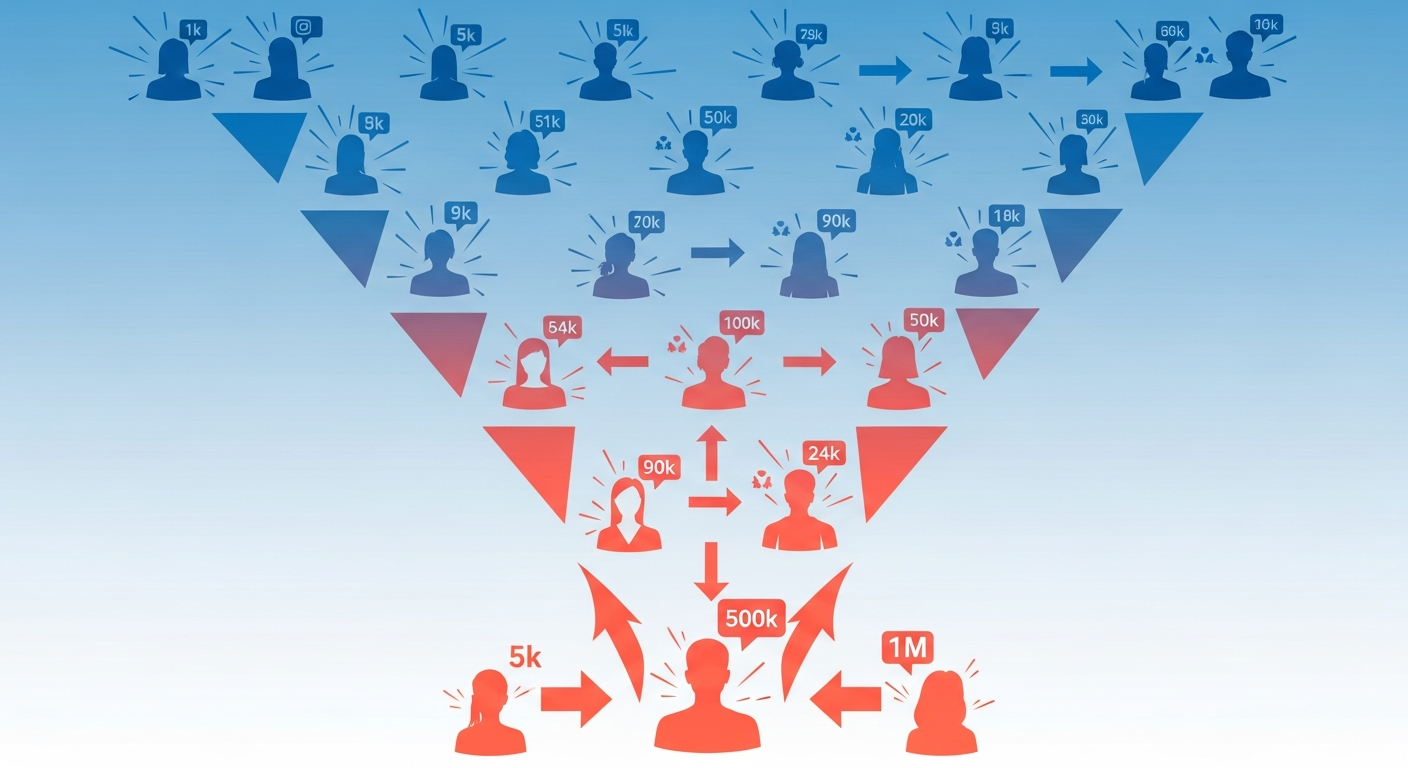

Analyzing Social Engagement for Lead Generation
The most valuable leads aren't hiding in purchased databases or cold outreach lists. They're publicly signaling their needs, frustrations, and buying intent every day across social media—if you know how to find them.
Introduction
Traditional lead generation relies on casting wide nets: buying contact lists, running generic ads, and hoping the right prospects stumble across your content. But this approach ignores a fundamental shift in buyer behavior. Today's prospects research solutions online, ask peers for recommendations, and voice their challenges publicly before ever speaking to sales.
Social engagement analysis flips the script. Instead of interrupting strangers, you identify people already discussing problems your product solves. Instead of guessing at buyer intent, you observe it directly through their posts, comments, and interactions. This isn't just more efficient—it produces leads who are already warmed up and problem-aware.
The challenge? Social platforms generate millions of data points daily. Without systematic approaches to filter signal from noise, the opportunity remains theoretical. This guide breaks down practical methods for turning social engagement into qualified leads.
Understanding Engagement Signals
Not all social interactions carry equal weight for lead generation. A like is different from a comment, which is different from a detailed post describing a specific pain point. Understanding this hierarchy helps you prioritize where to focus.
High-Intent Signals
The strongest lead indicators come from original content creation:
- Problem statements: Posts describing specific challenges ("Our team spends 20 hours weekly on manual data entry")
- Solution seeking: Direct questions asking for recommendations ("What tools do you use for X?")
- Frustration expressions: Complaints about current solutions ("Switched to [Competitor] and regretting it")
- Comparison discussions: Evaluating alternatives indicates active buying mode
These signals reveal not just interest but active consideration. Someone publicly asking for CRM recommendations is infinitely more valuable than someone who liked a generic business post.
Medium-Intent Signals
Engagement with relevant content shows topical interest without explicit need:
- Commenting on industry discussions: Demonstrates domain involvement
- Sharing thought leadership: Suggests alignment with certain approaches
- Following key accounts: Indicates professional focus areas
- Participating in relevant hashtag conversations: Shows community membership
These prospects need nurturing but have demonstrated relevant interest.
Low-Intent Signals
Basic engagement metrics provide weak signal alone:
- Likes without comments
- Follows without further interaction
- One-time engagement on viral content
While less immediately actionable, these signals become valuable when combined with other indicators or tracked over time.
Identifying Prospects Through Content Analysis
The most scalable approach to social lead generation starts with content—finding posts that reveal buyer intent, then working backward to the authors.
Keyword-Based Discovery
Effective keyword strategies go beyond obvious product categories. Consider:
Direct need expressions:
- "looking for [solution type]"
- "anyone recommend [category]"
- "struggling with [problem]"
- "need help with [challenge]"
Frustration indicators:
- "frustrated with [competitor/approach]"
- "why is [process] so difficult"
- "there has to be a better way to [task]"
Evaluation language:
- "comparing [option A] vs [option B]"
- "thinking about switching from [current solution]"
- "pros and cons of [category]"
Trigger events:
- "just hired [role that uses your product]"
- "scaling our [relevant function]"
- "launching [initiative that creates need]"
Combining exact phrase matching with boolean operators lets you filter high-intent language from generic mentions.
Engagement Pattern Analysis
Beyond individual posts, patterns reveal prospect quality:
Sustained interest: Someone engaging with multiple posts about the same topic over weeks shows deeper need than a single comment.
Discussion depth: Authors who write lengthy replies or create follow-up posts demonstrate active problem-solving, not passive browsing.
Cross-platform consistency: The same person discussing similar challenges on Twitter and Instagram signals genuine preoccupation rather than casual mention.
Mapping Influence Networks for Lead Discovery
Your best prospects often cluster around specific accounts, communities, or conversations. Network analysis reveals these concentrations.
Following the Right Conversations
When you find one high-quality prospect, examine:
- Who they follow: Reveals their information sources and influences
- Who follows them: Similar professionals facing similar challenges
- What posts they engage with: Shows which content resonates
- Who else engages with the same content: Peer prospects
A single highly relevant account can unlock an entire prospect community.
Identifying Connectors and Amplifiers
Some accounts disproportionately influence your target market. Finding them accelerates lead discovery:
Industry thought leaders: Their followers self-select for relevance. Analyzing who engages with their content about your problem space reveals concentrated prospect pools.
Community managers: Professional group leaders often have the exact audience you need.
Satisfied customers (of you or competitors): Their networks likely contain similar prospects. Analyzing who engages with their product-related posts surfaces warm leads.
Engagement Cascades
When content goes viral within your target market, the engagement trail becomes a prospect list. Tracking who retweets, quotes, or comments on relevant viral posts lets you identify hundreds of prospects from a single piece of content.
Qualifying Leads Through Profile Analysis
Finding prospects through engagement is just the first step. Profile analysis separates high-value leads from noise.
Professional Signals
Key profile elements that indicate qualified leads:
- Job title and company: Does their role have budget authority or influence?
- Company size indicators: Follower counts, employee mentions, and engagement levels hint at scale
- Bio keywords: Professional focus areas and current priorities
- Content themes: What they consistently post about reveals genuine interests versus passing mentions
Engagement Quality Metrics
Account-level engagement patterns suggest lead quality:
- Posting frequency: Active accounts indicate engaged professionals
- Response rates: People who reply to comments are more likely to respond to outreach
- Content depth: Thoughtful posts suggest senior, decision-capable professionals
- Network quality: Well-connected accounts often have larger budgets and influence
Authenticity Verification
Bot accounts and inactive profiles waste outreach effort. Warning signs include:
- Extremely high posting frequency with low engagement
- Generic or copied content
- Follower/following ratios that suggest purchased followers
- Account age inconsistent with follower counts
- Irregular posting patterns (bursts of activity followed by silence)
Filtering for authentic accounts dramatically improves conversion rates on any leads generated.
How Xpoz Addresses This
Manual social monitoring doesn't scale. Checking individual profiles, searching keywords across platforms, and tracking engagement patterns by hand caps your lead generation at dozens of prospects when thousands exist.
Xpoz automates the systematic analysis that makes social lead generation viable at scale.
Keyword-based prospect discovery uses getTwitterUsersByKeywords and getInstagramUsersByKeywords to find people who've posted about specific topics. Rather than searching posts and manually checking authors, you receive deduplicated user profiles of everyone discussing relevant themes—complete with engagement metrics showing who generates the most discussion.
Engagement network mapping through getTwitterPostInteractingUsers and getInstagramPostInteractingUsers reveals who engaged with specific content. When a competitor's product announcement generates comments, or an industry thought leader's post about your problem space goes viral, you can extract every commenter, quoter, and retweeter as prospects.
Profile enrichment via getTwitterUser and getInstagramUser adds context to prospects: follower counts, bio information, verification status, posting patterns, and (on Twitter) authenticity scoring that flags potential bot accounts.
Network analysis using getTwitterUserConnections and getInstagramUserConnections expands from known good prospects to their professional networks—often the richest source of similar leads.
Volume tracking through countTweets monitors keyword mention trends over time, helping you identify when conversations peak and engagement windows open.
The platform handles pagination automatically (critical when analyzing networks with thousands of connections) and exports results to CSV for integration with CRM systems and outreach tools.
Practical Examples
Example 1: Capturing Active Buyers
A B2B software company wants to find prospects actively evaluating solutions.
Approach: Search for posts containing evaluation language:
- Query:
"looking for" OR "anyone recommend" OR "comparing"combined with relevant product category terms - Filter by language and date range to capture recent conversations
- Request fields including engagement metrics to prioritize high-discussion posts
Results: A list of users actively seeking recommendations, sorted by the engagement their posts generated. Higher engagement often correlates with decision-makers whose networks trust their judgment.
Follow-up: Analyze the connections of the most engaged prospects to find additional buyers in similar evaluation stages.
Example 2: Competitor Dissatisfaction Mining
A CRM vendor wants to identify prospects frustrated with a competitor.
Approach: Monitor mentions of competitor combined with frustration language:
- Query:
"[Competitor name]" AND ("frustrated" OR "switching" OR "alternative" OR "problems") - Track commenters on the competitor's support-related posts
- Analyze quote tweets that add negative commentary to competitor announcements
Results: Prospects with demonstrated dissatisfaction, already primed for alternatives. Their specific complaints reveal exactly which pain points to address in outreach.
Example 3: Event-Based Lead Capture
A marketing analytics company wants leads from professionals attending an industry conference.
Approach: During and immediately after the event:
- Search for event hashtag and conference name mentions
- Identify users engaging with speaker content about relevant topics
- Analyze who interacted with posts about sessions related to your solution area
Results: A qualified list of professionals who demonstrated interest in your topic area by attending relevant sessions—far more valuable than a generic attendee list.
Example 4: Thought Leader Audience Analysis
A consulting firm wants prospects who follow specific industry experts.
Approach:
- Identify 3-5 thought leaders whose audiences match your ideal customer profile
- Analyze their follower networks for professional indicators
- Track who engages with their problem-focused content (not just viral posts)
Results: A concentrated prospect pool that has self-selected for industry relevance and thought leadership alignment—often more receptive to sophisticated solutions.
Key Takeaways
-
Intent signals vary in strength: Problem statements and solution-seeking posts indicate active buyers; likes and follows need additional qualification.
-
Content reveals prospects: Searching for specific language patterns surfaces people discussing relevant challenges—work backward from posts to find leads, not forward from demographic guesses.
-
Networks concentrate prospects: One good lead's connections often contain dozens more; analyzing engagement clusters beats random outreach.
-
Profile analysis separates quality from quantity: Job titles, engagement patterns, and authenticity indicators help prioritize outreach to leads most likely to convert.
-
Automation makes it practical: Manual social monitoring caps at dozens of leads; systematic analysis using tools like Xpoz scales to thousands while improving targeting precision.
Conclusion
Social engagement analysis represents a fundamental improvement over traditional lead generation. Instead of interrupting strangers who may or may not have relevant needs, you identify prospects who've already raised their hands—publicly discussing challenges, seeking recommendations, or expressing frustration with alternatives.
The methodology is straightforward: define the language patterns that indicate buyer intent, search systematically across platforms, analyze the networks around high-value prospects, and qualify based on profile indicators. The challenge is scale—doing this manually caps your lead generation far below its potential.
Whether you build internal tooling, adopt platforms like Xpoz, or combine approaches, the opportunity is clear. Your best leads are already talking about their problems. The question is whether you're listening systematically enough to find them.