Cross-Platform Sentiment Analysis Best Practices
The comment sections are brutal. A product launch that seemed to land well on Instagram is getting torn apart on Twitter. Meanwhile, your competitor's mediocre announcement is somehow generating enthusiasm across both platforms. What's going on?
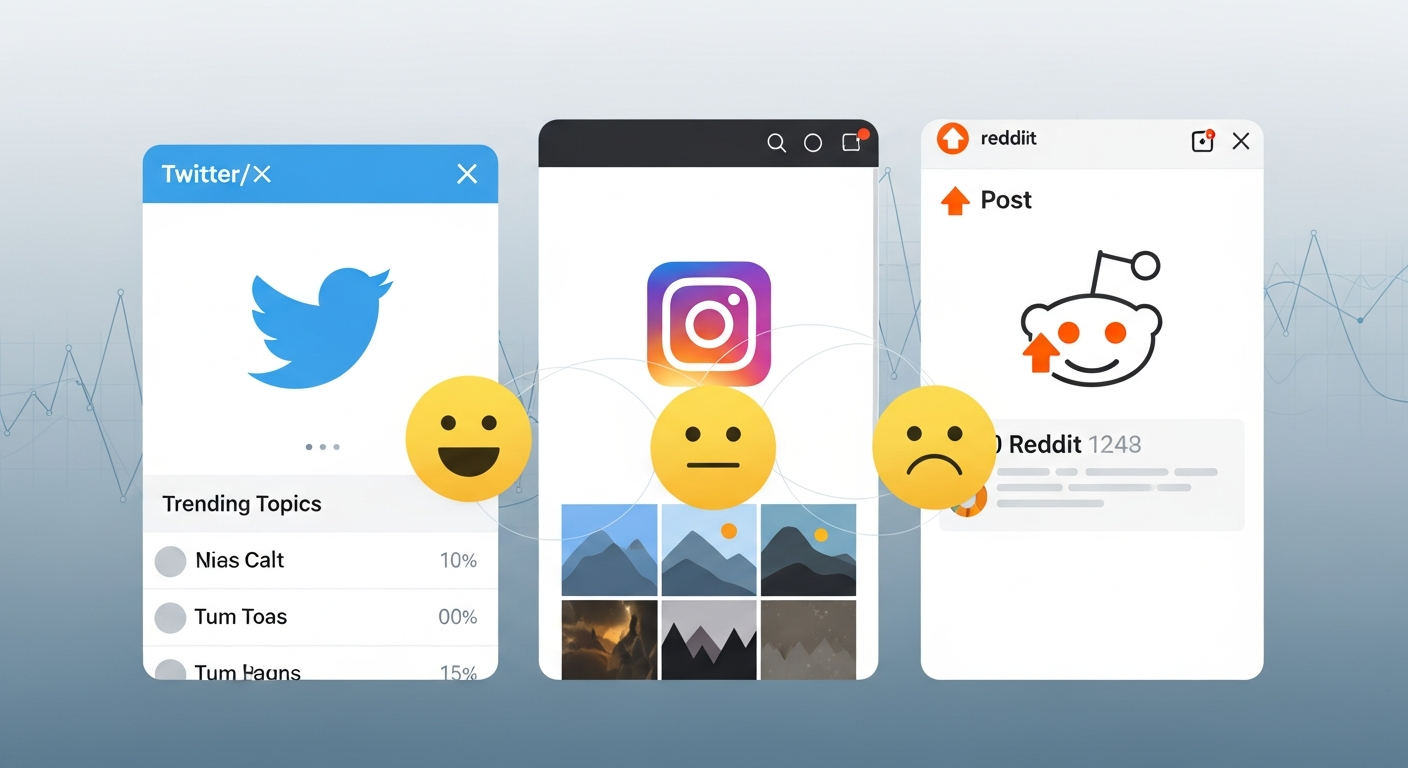
This disconnect isn't unusual—it's the norm. Sentiment doesn't travel uniformly across platforms, and the brands that understand this asymmetry gain a significant competitive advantage. Cross-platform sentiment analysis has become essential for anyone trying to understand how audiences truly feel about topics, products, or campaigns.
Introduction
Sentiment analysis—the process of identifying and categorizing opinions expressed in text—has evolved from a nice-to-have into a core component of social intelligence. But running sentiment analysis on a single platform gives you an incomplete picture at best, a misleading one at worst.
Consider: Instagram audiences skew younger and respond to visual storytelling. Twitter users engage in real-time commentary and debate. The same brand announcement might generate celebratory emoji reactions on one platform and skeptical quote tweets on another. Understanding these differences requires analyzing sentiment across platforms simultaneously, while accounting for each platform's unique characteristics.
This guide covers the practices that separate effective cross-platform sentiment analysis from the kind that leads to bad decisions.
Why Single-Platform Analysis Falls Short
When you analyze sentiment on just one platform, you're looking at a self-selected audience through a single lens. Here's what you miss:
Demographic blind spots. Each platform attracts different user bases. A tech product might receive glowing reviews from the developer-heavy Twitter crowd while Instagram users—potential mainstream customers—express confusion about the same features.
Context collapse. Sarcasm, irony, and platform-specific communication styles don't translate. "This is fine" accompanied by the famous dog-in-flames meme means something very different from a sincere "This is fine" in a product review.
Amplification asymmetry. Negative sentiment often spreads faster on Twitter through quote tweets and threads, while Instagram's algorithm tends to surface more positive engagement. Measuring sentiment without understanding these dynamics leads to skewed conclusions.
Conversation fragmentation. Major discussions often span platforms. A controversy might originate on Twitter, get summarized on Instagram Stories, and generate its most substantive debate in LinkedIn comments. Single-platform analysis catches fragments.
Building a Cross-Platform Sentiment Framework
Effective cross-platform sentiment analysis requires a structured approach. Here's how to build one:
1. Establish Consistent Measurement Baselines
Before comparing sentiment across platforms, you need comparable metrics. This means:
- Defining your sentiment categories consistently. Are you using a simple positive/negative/neutral classification, or a more nuanced scale? Apply the same framework everywhere.
- Accounting for platform volume differences. Raw numbers mislead. 100 negative mentions on a platform where you have 10,000 total mentions is very different from 100 negative mentions out of 500.
- Normalizing engagement metrics. A "like" on Instagram and a "like" on Twitter carry different weights. Build conversion factors based on your historical data.
2. Map Platform-Specific Sentiment Signals
Each platform has unique indicators of sentiment:
Twitter/X signals:
- Quote tweet ratio (high quote-to-retweet ratio often indicates controversy)
- Reply sentiment versus original post engagement
- Thread participation patterns
- Hashtag co-occurrence with known positive or negative tags
Instagram signals:
- Comment-to-like ratio (lower ratios can indicate passive engagement without strong feeling)
- Emoji usage patterns in comments
- Story mention sentiment versus feed post sentiment
- Video completion rates and comment timing
3. Account for Temporal Patterns
Sentiment evolves differently across platforms:
- Twitter sentiment tends to spike quickly and decay. Initial reactions often set the tone.
- Instagram sentiment builds more gradually. The algorithm surfaces content over days, not hours.
- Cross-platform sentiment migration is real. Controversy that starts on Twitter often reaches Instagram 24-48 hours later, sometimes with shifted framing.
Track sentiment over time windows appropriate to each platform rather than taking snapshots.
Practical Sentiment Analysis Techniques
Moving from theory to practice requires specific approaches:
Keyword and Phrase Monitoring
Start with boolean queries that capture sentiment-laden language around your topics. For sentiment analysis, this means going beyond simple brand mentions to capture:
- Comparative statements ("better than," "worse than," "prefer")
- Emotional language ("love," "hate," "frustrated," "excited")
- Intent signals ("switching to," "canceling," "recommending")
For example, tracking "your brand" AND (love OR amazing OR "best") alongside "your brand" AND (hate OR terrible OR "worst") gives you sentiment-specific subsets to analyze.
Engagement Pattern Analysis
Raw text sentiment is just one input. Engagement patterns reveal sentiment that words don't always express:
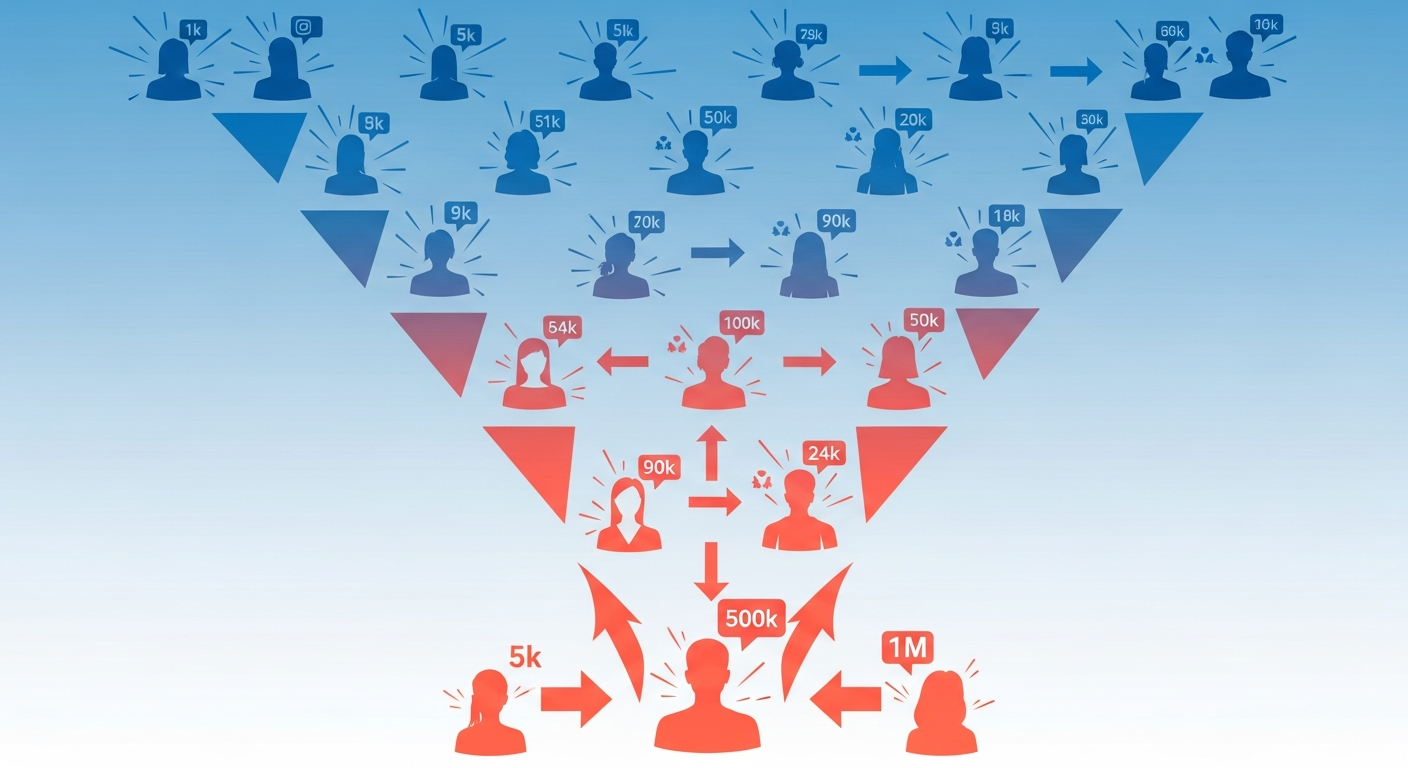
- Amplification analysis: Who shares content and how? High-follower accounts sharing negative sentiment is more significant than the same sentiment from low-engagement accounts.
- Comment thread dynamics: Does a post generate debate or agreement? Long reply chains often indicate controversy even when surface-level sentiment seems neutral.
- Interaction type distribution: Content that generates saves and shares indicates different sentiment than content that generates comments and replies.
Audience Segmentation
Not all sentiment is created equal. Segment your analysis by:
- Influence tiers: Sentiment from verified accounts or accounts with large followings may have outsized impact.
- Audience relationship: Existing customers versus prospects versus competitors' audiences each warrant separate analysis.
- Geographic and demographic factors: Sentiment often varies significantly by region or user cohort.
How Xpoz Addresses This
Cross-platform sentiment analysis at scale requires access to comprehensive social data and the ability to query it efficiently. This is where an MCP server like Xpoz becomes valuable.
Xpoz provides unified access to both Twitter and Instagram data through a consistent interface. For sentiment analysis specifically, several capabilities matter:
Keyword-based content retrieval lets you pull posts matching specific sentiment indicators across both platforms. Using getTwitterPostsByKeywords and getInstagramPostsByKeywords, you can construct queries that capture sentiment-laden content—exact phrases, boolean combinations, or exclusion patterns.
Engagement context comes through tools like getTwitterPostComments, getTwitterPostQuotes, and getInstagramCommentsByPostId. These let you analyze not just what people post, but how others respond—crucial for understanding sentiment dynamics.
User-level analysis via getTwitterPostInteractingUsers and getInstagramPostInteractingUsers allows you to understand who is expressing sentiment, not just what they're saying. This enables the audience segmentation that separates useful sentiment analysis from vanity metrics.
Volume tracking through countTweets provides the baseline data needed to normalize sentiment measurements over time.
The practical workflow looks like this: identify your sentiment-relevant keywords and phrases, pull matching content from both platforms, retrieve engagement and commenter data for context, then analyze patterns across the combined dataset. The CSV export functionality makes it straightforward to pull complete datasets for analysis in your preferred tools.
Practical Examples
Let's walk through how these practices apply to real scenarios:
Scenario 1: Product Launch Monitoring
A software company launches a new feature. Here's a cross-platform sentiment analysis approach:
-
Set up keyword monitoring for the product name, feature name, and common misspellings across Twitter and Instagram.
-
Pull initial reaction data for the first 48 hours, segmented by platform.
-
Analyze engagement patterns:
- On Twitter, check the quote-tweet-to-retweet ratio on your announcement. High quotes suggest people are adding commentary (positive or negative). Pull the actual quotes to understand the framing.
- On Instagram, analyze comment sentiment on your launch post. Are people asking questions (interest but confusion) or expressing reactions (clear sentiment)?
-
Identify influential voices: Pull the users who are driving discussion. A negative reaction from a high-follower industry account matters more than scattered individual complaints.
-
Track sentiment evolution: Check how sentiment shifts over the following week. Does initial enthusiasm sustain? Do concerns grow?
Scenario 2: Competitive Sentiment Comparison
A brand wants to understand how their sentiment compares to a competitor's:
-
Establish comparable queries for both brands. Ensure you're capturing mentions at similar scope levels.
-
Pull content mentioning each brand along with sentiment-indicator keywords.
-
Analyze the comparative mentions specifically—posts that mention both brands. These reveal direct preference signals.
-
Segment by audience overlap: Identify users who engage with both brands. Their sentiment signals potential switchers.
-
Cross-reference platforms: Where is sentiment stronger or weaker for each brand? This reveals platform-specific positioning opportunities.
Scenario 3: Crisis Sentiment Tracking
An unexpected PR issue emerges. Cross-platform sentiment analysis helps assess scope and trajectory:
-
Establish baseline sentiment from before the crisis using historical data.
-
Track hourly sentiment shifts across platforms. Twitter usually leads; Instagram follows.
-
Identify amplifiers: Who is spreading negative sentiment? Pull interacting users from high-engagement negative posts to understand the amplification network.
-
Monitor sentiment recovery: After response efforts, track whether sentiment returns to baseline and how quickly on each platform.
Common Mistakes to Avoid
Even with good tools and intentions, cross-platform sentiment analysis can go wrong:
Ignoring context in automated classification. Automated sentiment tools regularly misclassify sarcasm, industry jargon, and platform-specific language. Always sample and manually verify.
Over-indexing on volume. One platform might generate more mentions simply due to its user base characteristics, not because sentiment is stronger there.
Treating platforms as equivalent. A negative Instagram comment and a negative tweet thread with 50 replies are not comparable signals. Weight appropriately.
Snapshot analysis. Sentiment is dynamic. Single-point-in-time analysis misses trends and can catch anomalies rather than true patterns.
Ignoring silent sentiment. People who unfollow, mute, or simply stop engaging don't show up in sentiment analysis but represent real sentiment shifts.
Key Takeaways
-
Cross-platform sentiment analysis requires consistent frameworks but platform-specific interpretation. The same words mean different things in different contexts.
-
Engagement patterns often reveal more than text sentiment alone. Who shares, who responds, and how discussions evolve all carry signal.
-
Audience segmentation is essential. Aggregate sentiment numbers hide the variations that actually inform decisions.
-
Sentiment analysis is most valuable when tracked over time, not as snapshots. Trends matter more than absolute numbers.
-
Access to comprehensive cross-platform data—the kind Xpoz provides through unified APIs for Twitter and Instagram—is the foundation that makes sophisticated sentiment analysis possible.
Conclusion
Cross-platform sentiment analysis isn't about finding an average across platforms—it's about understanding how sentiment differs and why. The brands that do this well don't just know whether people like them; they understand the nuances of that sentiment across different audiences and contexts.
The barrier to effective cross-platform analysis has traditionally been data access. Pulling comprehensive data from multiple platforms, matching it to a consistent schema, and enabling the kind of flexible querying that sentiment analysis requires used to demand significant engineering investment.
Tools like Xpoz lower that barrier. When you can query Twitter and Instagram data through a unified interface—running boolean searches, pulling engagement data, exporting complete datasets—the sophisticated sentiment analysis approaches described here become accessible to any team willing to apply them.
Start with the fundamentals: consistent measurement, platform-appropriate interpretation, and audience segmentation. Build from there as your analysis matures. The insights are worth the effort.