Twitter/X Data Access Options Compared (2026)
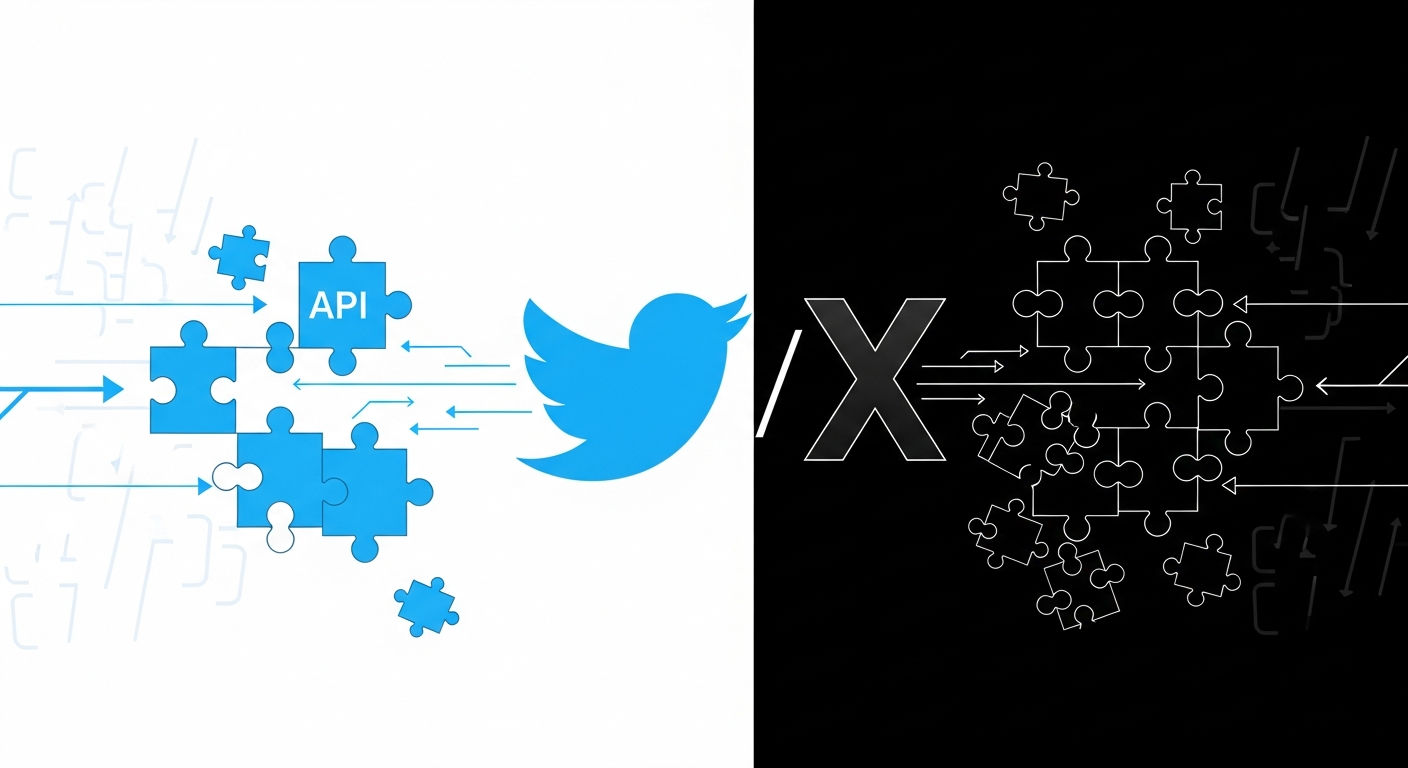
Accessing Twitter data in 2026 means navigating a fragmented landscape. The official API, third-party providers, AI-native platforms, and manual approaches each offer distinct tradeoffs in cost, capability, and complexity.
This guide provides a comprehensive comparison of every major option for accessing Twitter/X data, helping you identify the right approach for your specific needs.
Quick Comparison Matrix
| Method | Cost Range | Technical Skill | Data Coverage | Best For |
|---|---|---|---|---|
| Official X API | Pay-per-use from $5 per 1,000 post reads; Enterprise $42,000+/mo | High | Complete | Write access, compliance |
| Third-Party APIs | $0-$500/mo | Medium | 80-95% | Cost-effective analysis |
| MCP/AI-Native | $0-$200/mo | Low | 80-95% | Non-technical users, AI workflows |
| Web Scraping | Variable | Very High | Variable | Custom requirements |
| Data Marketplaces | Per-dataset | Low | Historical | One-time research |
Official X (Twitter) API
The authoritative source for Twitter data, operated by X Corp.
Tier Structure
X replaced its subscription tiers with pay-per-use pricing in February 2026. New developers load credits into the developer console and pay per resource returned; there is no free tier and no monthly subscription for self-serve access.
Pay-Per-Use (self-serve, the default for new developers)
- Cost: $0.005 per post read ($5 per 1,000), $0.010 per user profile, $0.015 per post created ($0.20 if the post contains a URL); reads of your own account's data cost $0.001
- Limits: 3 million post reads per monthly billing cycle; rate limits in 15-minute windows per app
- Search: recent search covers the last 7 days for every developer; full-archive search back to March 2006 requires an access upgrade on pay-per-use or an Enterprise plan
- Best for: posting, account management, small read volumes
Enterprise
- Cost: $42,000+/month (negotiated annual contracts)
- Limits: custom rate limits above the 3 million monthly read cap
- Features: full firehose and filtered streams, full-archive search, compliance feeds, dedicated support
- Best for: large enterprises, real-time monitoring at scale, mission-critical applications
Legacy Basic and Pro tiers (closed)
- Basic ($200/month) stopped taking new signups and remaining subscribers have been migrated to pay-per-use since June 2026
- Pro ($5,000/month, 1 million post reads, streaming) is closed to new signups
- Their figures still appear in older guides; they are not an option for a new project
Strengths
- Official data source: Guaranteed accuracy and completeness
- Write access: Only option for posting, DMs, ads management
- Compliance: Required for certain regulated industries
- Full feature set: Access to every API endpoint
- Reliability: Enterprise SLAs available
Limitations
- Cost escalates with volume: reading 100,000 posts costs $500, and profiles add $0.010 each
- Rate limits: per-app 15-minute windows and a 3 million post-read cap per billing cycle
- 7-day recent search: full-archive search needs an access upgrade or an Enterprise contract
- Developer account required: Application and approval process
- Terms restrictions: Strict rules on data usage and redistribution
When to Choose
Choose the official API when you need:
- Write access (posting tweets, managing accounts)
- Ads API integration
- Strict compliance requirements
- Real-time streaming at scale
- Complete data coverage guarantee
Third-Party Data APIs
Services that provide Twitter data access through their own infrastructure.
How They Work
Third-party providers collect and index public Twitter data, then expose it through their own APIs. This creates an alternative data layer that bypasses official API limitations.
Representative Options
TwitterAPI.io
- Pricing: $0.15 per 1,000 tweets, $0.18 per 1,000 profiles, pay-as-you-go with $0.10 in free credits
- Coverage: Twitter/X only
- Approach: REST API, drop-in replacement design
- Strengths: Familiar API structure, no monthly fee
Data365
- Pricing: Basic EUR 300/month for 500,000 credits and one network; Standard EUR 850/month for 1,000,000 credits and three networks; 14-day trial
- Coverage: Twitter/X, Instagram, TikTok, Reddit, Facebook, Pinterest, Threads
- Approach: RESTful API with consistent formats
- Strengths: Multi-platform, structured data, subscription predictability
SociaVault
- Pricing: One-time credit packs from $29 for 6,000 credits; 50 trial credits
- Coverage: X plus 25 other platforms
- Approach: Simplified pay-as-you-go API
- Strengths: Developer-friendly, credits never expire
Strengths
- Cost efficiency: 10-100x cheaper than official API for equivalent data
- No rate limit errors: Most providers handle throttling internally
- Historical access: Often includes archive data
- Simpler onboarding: No Twitter developer application required
- Multi-platform options: Some cover Instagram, TikTok, Reddit
Limitations
- Coverage gaps: May not capture every tweet
- Data freshness: Some delay between tweet and availability
- Legal gray area: Terms of service considerations
- Variable quality: Reliability differs between providers
- Read-only: Cannot post or manage accounts
When to Choose
Choose third-party APIs when you need:
- Cost-effective large-scale data access
- Historical posts without the official API's full-archive access upgrade
- Multi-platform coverage in one integration
- Programmatic access without official API complexity
Try this with Xpoz
No API keys needed. Query Twitter, Reddit, Instagram & TikTok with natural language.
AI-Native / MCP Solutions
A newer category using the Model Context Protocol to enable natural language data access through AI assistants.
How They Work
Instead of traditional API calls, you query social data through natural language conversations with AI assistants like Claude or ChatGPT. The MCP server translates queries and returns structured results.
Example: Xpoz
- Pricing: Free (up to 75K results, one-time), Pro $20/mo (up to 1M/month), Max $200/mo (up to 18M/month)
- Coverage: Twitter, Instagram, TikTok, Reddit (billions of indexed posts)
- Approach: MCP integration with Claude/ChatGPT
- Strengths: No coding required, natural language interface
Sample Interaction:
User: "Find the top 50 tweets about 'AI regulation' from the past week,
sorted by engagement"

[Xpoz returns structured results with tweet text, authors, metrics]
Strengths
- Zero coding required: Natural language replaces API integration
- Exploratory analysis: Easy to iterate without code changes
- Multi-platform: Single interface for multiple social networks
- AI-integrated workflow: Data access within analysis environment
- Low barrier to entry: Non-technical users can access data
Limitations
- Requires AI assistant: Must use Claude, ChatGPT, or similar
- Less programmatic: Not ideal for automated pipelines
- Learning curve: Effective prompting takes practice
- Indirect access: Data passes through AI layer
When to Choose
Choose MCP/AI-native solutions when you:
- Already use AI assistants in your workflow
- Need exploratory, iterative analysis
- Lack development resources for API integration
- Want multi-platform data without multiple integrations
- Prefer natural language over code
Web Scraping
Building custom systems to extract data directly from Twitter's web interface.
How It Works
Scrapers use browser automation (Puppeteer, Playwright, Selenium) or reverse-engineered API calls to extract data from Twitter pages.
Approaches
Browser Automation
- Simulates real user browsing
- Renders JavaScript, handles dynamic content
- Slower, more resource-intensive
- More resilient to simple blocking
HTTP Request Scraping
- Directly calls Twitter's internal APIs
- Faster, more efficient
- Requires reverse engineering
- More likely to break with changes
Strengths
- Full control: Build exactly what you need
- No per-request costs: After development
- Custom data extraction: Capture specific elements
- No third-party dependency: Direct source access
Limitations
- Maintenance burden: Twitter changes break scrapers regularly
- Anti-bot measures: CAPTCHAs, rate limiting, account bans
- Legal risk: Potential ToS violations
- Engineering investment: Significant development time
- Scale challenges: Difficult to achieve reliable high-volume extraction
- Infrastructure costs: Proxies, compute, error handling
Hidden Costs
What appears "free" often costs more than paid alternatives:
- 40-100+ engineering hours for initial development
- Ongoing maintenance (10-20 hours/month typical)
- Proxy infrastructure ($200-$2,000+/month for scale)
- Account acquisition and management
- Downtime and data gaps during breakages
When to Choose
Choose web scraping only when:
- You need data not available through any API
- You have dedicated engineering resources
- The data is for internal use only
- You accept the maintenance commitment
- Legal has approved the approach
Data Marketplaces and Datasets
Pre-collected Twitter data available for purchase or download.
Sources
Academic Datasets
- University research archives
- Often free for academic use
- Specific time periods and topics
- May require institutional access
Commercial Datasets
- Companies like Bright Data sell pre-packaged data
- Pricing varies widely ($500-$50,000+)
- Various coverage and freshness options
- Licensing restrictions apply
Open Data
- Some historical Twitter data publicly available
- Limited scope and recency
- Useful for training ML models
Strengths
- No API integration: Just download and analyze
- Historical access: Data from specific periods
- Predictable cost: One-time purchase
- Research-ready: Often pre-cleaned and formatted
Limitations
- Static snapshots: No real-time updates
- May miss your needs: Predefined scope
- Quality varies: No standardization
- Licensing limits: Restrictions on use
- Stale data: Historical only
When to Choose
Choose data marketplaces when you:
- Need historical data for a specific period
- Are training machine learning models
- Have a one-time research project
- Don't need ongoing data access
Decision Framework
By Budget
| Budget | Recommended Path |
|---|---|
| $0 | Xpoz free tier (the official API has had no free tier since February 2026) |
| $20-100/mo | Xpoz Pro or third-party API entry tier |
| $100-500/mo | Third-party API, plus official pay-per-use reads for posting or small read volumes |
| $500-5,000/mo | Official pay-per-use at volume (100,000 to 1,000,000 post reads) or enterprise third-party plans |
| $5,000+/mo | Official API Enterprise |
By Use Case
Academic Research
- Primary: Academic API programs (if available)
- Alternative: Xpoz or third-party APIs
- Backup: Data marketplaces for historical
Startup MVP
- Primary: Xpoz or third-party APIs (cost-effective, fast)
- Graduate to: Official API as you scale
Enterprise Analytics
- Primary: Official API Enterprise (compliance, reliability)
- Supplement with: Third-party for cost-sensitive operations
Marketing/Social Listening
- Primary: Third-party APIs or Xpoz (multi-platform helpful)
- Official API: Only if posting required
AI/LLM Applications
- Primary: Xpoz (native MCP integration)
- Alternative: Third-party APIs with custom integration
Real-time Monitoring
- Primary: Official API streaming (lowest latency)
- Alternative: Third-party providers with real-time features
By Technical Capability
| Team Profile | Best Option |
|---|---|
| No developers | Xpoz (natural language) |
| 1-2 developers | Third-party APIs |
| Full engineering team | Any option; evaluate TCO |
| Data science focus | Xpoz + CSV exports |
How Xpoz Fits In
Xpoz occupies a unique position in this landscape as an AI-native solution that combines multi-platform coverage with natural language access.
Positioning
- Cost: Between free tier and mid-range third-party APIs
- Technical barrier: Lowest (natural language interface)
- Coverage: Multi-platform (Twitter, Instagram, TikTok, Reddit)
- Best fit: Teams using AI assistants, non-technical analysts, rapid prototyping
Key Differentiators
Natural Language Queries
"Find all tweets mentioning our competitor from accounts
with 10,000+ followers in the past month"
Multi-Platform in One Interface
"Compare mentions of 'product launch' across Twitter
and Instagram from last week"
Built-in Analysis
"Which users drove the most engagement on tweets
about climate change yesterday?"
Xpoz Tools
getTwitterPostsByKeywords- Search tweets by topicgetTwitterUserConnections- Analyze follower networksgetTwitterPostInteractingUsers- Find engaged userscountTweets- Track mention volumes- CSV export for offline analysis
Pricing Comparison
| Tier | Results/Month | Cost | Per-1K Cost |
|---|---|---|---|
| Free | 75,000 (one-time) | $0 | $0 |
| Pro | 1,000,000 | $20 | $0.02 |
| Max | 18,000,000 | $200 | $0.011 |
Compare to:
- Official API pay-per-use: $5 per 1,000 post reads plus $10 per 1,000 profiles, capped at 3 million reads a month
- Official API Enterprise: $42,000+/month minimum for streaming and custom limits
- Third-party APIs: $0.05-$0.50 per 1,000 tweets typically
Key Takeaways
-
Official API is essential for write access but expensive for read-heavy analytics at $5 per 1,000 post reads.
-
Third-party APIs offer the best cost-efficiency for large-scale data access without compliance requirements.
-
AI-native solutions like Xpoz lower the technical barrier dramatically, enabling non-developers to access social data.
-
Web scraping has hidden costs that often exceed paid alternatives when accounting for engineering time.
-
Data marketplaces serve niche use cases for historical research and ML training.
-
Multi-platform coverage matters if you're analyzing beyond Twitter alone: solutions like Xpoz provide unified access.
-
Match your choice to your constraints: budget, technical resources, compliance needs, and data freshness requirements all factor in.
Frequently Asked Questions
What are the different ways to access Twitter data?
Five routes exist in 2026: the official X API (pay-per-use at $0.005 per post read, with Enterprise contracts for streaming and custom limits), third-party data APIs such as TwitterAPI.io, Data365 and SociaVault, AI-native MCP platforms such as xpoz that answer natural-language queries, self-built scrapers, and pre-collected datasets. Only the official API allows posting and account management; every other route is read-only.
Which Twitter data access method is most cost-effective?
For reading public posts at volume, third-party APIs cost the least per record: TwitterAPI.io charges $0.15 per 1,000 tweets against $5 per 1,000 post reads on the official pay-per-use API. For teams without developers, xpoz's Pro plan at $20 a month covers up to 1,000,000 results across Twitter/X, Instagram, TikTok and Reddit. The official API is the cheapest route only for posting, at $0.015 per post.
Can I get historical Twitter data?
Yes, through several routes. The official X API's recent search covers the last 7 days for every developer, and full-archive search back to March 2006 requires an access upgrade on pay-per-use or an Enterprise contract, per docs.x.com. Third-party providers and xpoz's indexed database return older posts without that upgrade, and data marketplaces sell fixed historical datasets for one-time research projects.
Does the X API still have a free tier?
No. X discontinued the free tier and closed the Basic and Pro subscriptions to new developers when it moved to pay-per-use in February 2026. New accounts load credits and pay per resource returned, with a cap of 3 million post reads per monthly billing cycle. Free access to Twitter/X data now comes from third-party trial credits and xpoz's one-time free tier of up to 75,000 results.
Conclusion
The Twitter data access landscape in 2026 offers more options than ever, from the authoritative but expensive official API to cost-effective third-party services and emerging AI-native approaches.
For most users, the practical path involves:
- Start with AI-native access (like Xpoz) for exploration and validation
- Scale with third-party APIs when you need programmatic integration
- Add official API only when you need write access or strict compliance
The key is matching your method to your actual needs. A researcher analyzing sentiment has different requirements than an enterprise building real-time monitoring infrastructure. Evaluate each option against your specific constraints (budget, technical resources, compliance requirements, and data needs) and you'll find that effective Twitter data access is more achievable than official pricing might suggest.