Network Analysis: Mapping Influence in Online Communities
Every online community has a hidden architecture. Beneath the visible posts, comments, and shares lies an intricate web of relationships that determines how information flows, which voices get amplified, and who truly shapes conversations. Understanding this architecture—through network analysis and influence mapping—has become essential for anyone seeking to navigate or leverage digital spaces effectively.
Introduction
When a piece of content goes viral, it rarely spreads randomly. It travels along invisible pathways, amplified by specific nodes in a network who have the reach, credibility, or positioning to push it further. These influence patterns aren't obvious from looking at individual posts or profiles. They only emerge when you step back and examine the network as a whole.
Network analysis offers exactly this perspective. By mapping the connections between accounts—who follows whom, who engages with whose content, who amplifies which messages—we can identify the structural dynamics that govern online communities. This isn't just academic curiosity. For marketers, researchers, security professionals, and community managers, understanding influence networks provides actionable intelligence that surface-level metrics simply cannot offer.
The challenge has always been access. Mapping networks at scale requires pulling together massive amounts of relational data, processing it efficiently, and visualizing patterns that might involve thousands or millions of connections. Until recently, this capability was limited to platforms themselves or well-funded research teams with engineering resources.
That's changing.
The Fundamentals of Online Network Analysis
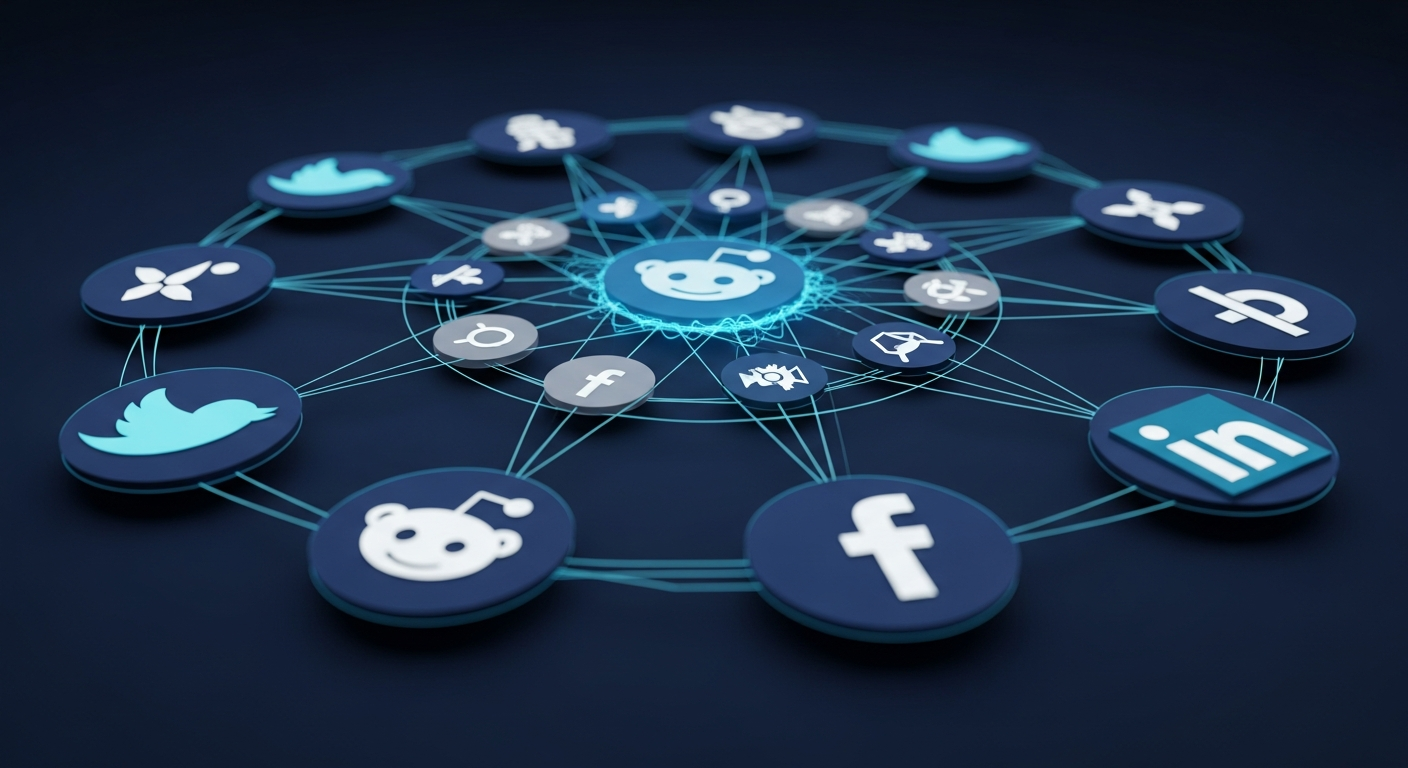
Network analysis in digital spaces borrows concepts from graph theory and social network analysis. At its core, you're examining two things: nodes (the accounts or users) and edges (the connections between them). These connections can be directional—like following someone on Twitter—or bidirectional, like mutual follows.
Key Metrics That Matter
Several metrics help quantify influence within networks:
Degree centrality counts direct connections. An account with 100,000 followers has high degree centrality. But raw follower counts can be misleading—purchased followers and bot networks inflate these numbers without delivering real influence.
Betweenness centrality measures how often an account sits on the shortest path between other accounts. High betweenness suggests someone who bridges different communities, potentially serving as a gatekeeper or information broker between groups that wouldn't otherwise interact.
Eigenvector centrality weights connections by the influence of the connected accounts. Being followed by ten influential accounts might matter more than being followed by a thousand inactive ones. This gets closer to measuring actual influence propagation potential.
Clustering coefficient reveals how interconnected an account's connections are with each other. High clustering suggests tight-knit communities where members know each other. Low clustering suggests an account that spans multiple disconnected groups.
Network Topologies
Different communities exhibit different structural patterns:
Hub-and-spoke networks center on a few dominant figures with many followers who don't follow each other. Think celebrity accounts or major media outlets.
Distributed networks spread influence more evenly, with many accounts of similar reach interconnected. Professional communities and niche interest groups often show this pattern.
Clustered networks contain distinct subgroups with dense internal connections but sparse connections between clusters. Political communities frequently fragment this way, creating echo chambers.
Identifying which topology describes your target community shapes how you approach engagement, messaging, and influence strategies.
Why Traditional Metrics Fail
Social platforms surface simple metrics: follower counts, likes, shares. These numbers are easy to game and often misleading about actual influence.
Consider two accounts, both with 50,000 followers. Account A gained followers through engagement pods, follow-for-follow schemes, and purchased bot followers. Account B grew organically through consistently valuable content that attracted genuine community members. Their follower counts are identical. Their actual influence is vastly different.
The distinction becomes visible at the network level. Account A's followers show telltale patterns: new accounts with few followers themselves, no connections to each other, minimal engagement history. Account B's followers cluster into coherent interest groups, have established posting histories, and show genuine engagement patterns.
Beyond individual accounts, network analysis reveals structural influence that metrics miss entirely. A mid-sized account that bridges two large but disconnected communities might have more practical influence on information flow than a larger account speaking only to an already-connected audience. Without mapping the network, you'd never identify this bridging position.
Practical Applications of Influence Mapping
Understanding network structure translates into concrete advantages across multiple use cases.
Influencer Identification and Validation
Finding the right influencers for partnerships or monitoring requires more than sorting by follower count. Network analysis reveals accounts that occupy strategic positions—bridges between communities, trusted voices within specific clusters, or rising figures whose structural position suggests growing influence before their follower counts catch up.
Validation matters just as much. Before investing in a partnership or treating an account as representative of a community, mapping their actual network connections reveals whether their influence is genuine. Accounts with authentic influence show coherent follower networks with real engagement patterns. Inflated accounts show disconnected, low-quality follower bases.
Community Discovery and Segmentation
Markets and audiences aren't monolithic. Network analysis reveals the actual community structure within a broad topic area—distinct clusters with different concerns, vocabularies, and influential figures. A brand trying to reach "fitness enthusiasts" might discover through network mapping that this audience fragments into bodybuilding communities, running communities, yoga communities, and CrossFit communities with limited overlap. Each requires different messaging and different influential voices.
Tracking Information Spread
When content goes viral or misinformation spreads, network analysis traces the actual diffusion path. Which accounts first amplified the content? Through which community clusters did it spread? Where did it jump between previously disconnected groups? This forensic capability matters for understanding how narratives form and spread, whether you're trying to replicate successful campaigns or counter harmful information.
Competitive Intelligence
Mapping competitor audiences reveals not just how many followers they have, but who those followers are and how they interconnect. You might discover a competitor has strong penetration in one community cluster while completely missing another—an opportunity for differentiated positioning. Tracking shared audiences between competitors and your own accounts identifies contested territories worth defending or capturing.
How Xpoz Enables Network Analysis
Conducting network analysis at scale requires access to relational data that platforms don't readily expose. Xpoz provides this access through a straightforward interface that handles the complexity of data retrieval and pagination.
Mapping Follower Networks
The foundation of influence mapping is connection data. Xpoz's getTwitterUserConnections and getInstagramUserConnections tools retrieve complete follower and following lists with server-side pagination handling thousands of connections efficiently. Each retrieval returns not just usernames but profile metadata—follower counts, descriptions, verification status—enabling immediate filtering and analysis.
For a thought leader account, you might pull their complete follower list with fields like username, followersCount, description, and isVerified. This gives you the raw data to identify influential followers, cluster followers by self-described interests, and map the network structure around this central account.
Identifying Key Amplifiers
When specific content matters—a campaign, a controversy, a competitor announcement—you need to know who amplified it. The getTwitterPostInteractingUsers tool retrieves everyone who retweeted, quoted, or commented on a specific post. Cross-referencing these amplifiers against their own follower counts and network positions reveals who drove the spread.
This capability transforms post-mortem analysis of viral content. Instead of just noting that something spread widely, you can map exactly how it spread and which accounts at which network positions drove the amplification.
Discovering Topic Communities
Finding relevant accounts isn't just about keyword searching bios. getTwitterUsersByKeywords and getInstagramUsersByKeywords identify users based on what they actually post about. Search for users discussing "sustainable fashion" or "machine learning research," and you get accounts who actively engage with these topics—not just those who claim to in static profile descriptions.
The returned data includes engagement aggregations: how many relevant posts each user has made, total likes and shares on that relevant content. This surfaces active voices rather than dormant accounts, helping identify genuine community participants.
Bulk Data Export for Advanced Analysis
Surface-level exploration happens interactively, but serious network analysis requires processing data in specialized tools. Xpoz's CSV export functionality delivers complete datasets—full follower lists, all posts matching a query, every comment on a post—for import into network analysis software, visualization tools, or custom analytics pipelines.
The workflow is straightforward: any paginated query generates a dataDumpExportOperationId that produces a downloadable CSV within 30-60 seconds. This bridges the gap between data access and sophisticated analysis without requiring users to manually page through hundreds of API calls.
Practical Examples
Example: Mapping a Professional Community
A B2B software company wants to understand the data engineering community on Twitter to inform their content strategy and identify potential advocates.
Step 1: Seed identification. Using getTwitterUsersByKeywords, they search for users posting about "data pipeline," "ETL," "dbt," and "Airflow." This surfaces active practitioners rather than just accounts with relevant terms in their bios.
Step 2: Network expansion. For the most active and influential accounts from step one, they pull follower lists with getTwitterUserConnections. This reveals the broader community structure around known thought leaders.
Step 3: Cluster identification. Exporting the combined connection data to network visualization tools reveals distinct clusters: cloud platform specialists, open-source tool maintainers, enterprise data architects, and analytics engineers. Each cluster has different concerns and different influential voices.
Step 4: Strategic application. The company now knows which accounts bridge multiple clusters (potential partnership targets), which clusters they're strong in versus missing from, and which conversations in each cluster present opportunities for relevant engagement.
Example: Tracking Campaign Amplification
A nonprofit launches an awareness campaign with a central hashtag and key message. They need to understand how it spread to inform future campaigns.
Step 1: Content identification. Using getTwitterPostsByKeywords, they find all posts containing their campaign hashtag during the campaign window.
Step 2: Amplifier analysis. For posts that achieved significant reach, getTwitterPostInteractingUsers identifies who retweeted and quoted. Aggregating across multiple successful posts reveals which accounts consistently amplified campaign content.
Step 3: Network positioning. Pulling the follower networks of top amplifiers reveals whether spread happened within an existing supporter base (dense internal connections) or reached new audiences (amplifiers who bridge to previously unconnected clusters).
Step 4: Future planning. The nonprofit identifies which organic amplifiers drove the most cross-community spread—accounts worth cultivating relationships with for future campaigns.
Example: Validating Influencer Authenticity
Before partnering with an influencer claiming significant reach in the sustainability space, a brand wants to verify genuine influence.
Step 1: Profile review. getInstagramUser pulls complete profile data including follower counts, posting history, and engagement metrics.
Step 2: Follower quality. getInstagramUserConnections retrieves the influencer's follower list. Examining these followers reveals whether they're real accounts with posting histories and their own follower networks, or suspicious low-quality accounts suggesting purchased followers.
Step 3: Engagement analysis. getInstagramPostInteractingUsers on recent posts shows who actually engages. Genuine influence shows engagement from real accounts within the claimed niche; inflated influence shows engagement from unrelated or suspicious accounts.
Step 4: Decision. The brand either proceeds confidently knowing the influence is genuine or avoids a partnership that would waste budget on fake reach.
Key Takeaways
-
Network structure reveals influence that metrics hide. Follower counts and engagement rates only tell part of the story. Position within network topology—bridging communities, central to clusters, connecting disparate groups—determines actual influence on information flow.
-
Influence mapping requires relational data at scale. Understanding networks means accessing and processing connection data for potentially thousands of accounts. Tools that handle pagination, bulk export, and efficient querying make this feasible without engineering infrastructure.
-
Applications span discovery, validation, and strategy. Whether you're finding influencers, validating authenticity, mapping competitive landscapes, or tracing information spread, network analysis provides insights that surface-level monitoring cannot.
-
Start with questions, not tools. The most valuable network analysis begins with specific questions: Who really influences this community? How did this content spread? Where are the boundaries between audience segments? Technology enables answers, but clarity on questions determines value.
Conclusion
Online communities are networks, and understanding them requires network thinking. The accounts that matter most aren't always the loudest or the largest—they're the ones occupying structural positions that enable influence over information flow.
Network analysis and influence mapping have moved from academic research to practical intelligence work. With access to relational data and tools to process it at scale, anyone can map the hidden architecture of online communities and make better decisions about engagement, partnership, messaging, and strategy.
The communities that matter to your work have structures waiting to be understood. The question is whether you'll operate with a surface-level view of counts and metrics, or develop the deeper understanding that network analysis provides.