How to Set Up Continuous Social Media Monitoring with an AI Agent
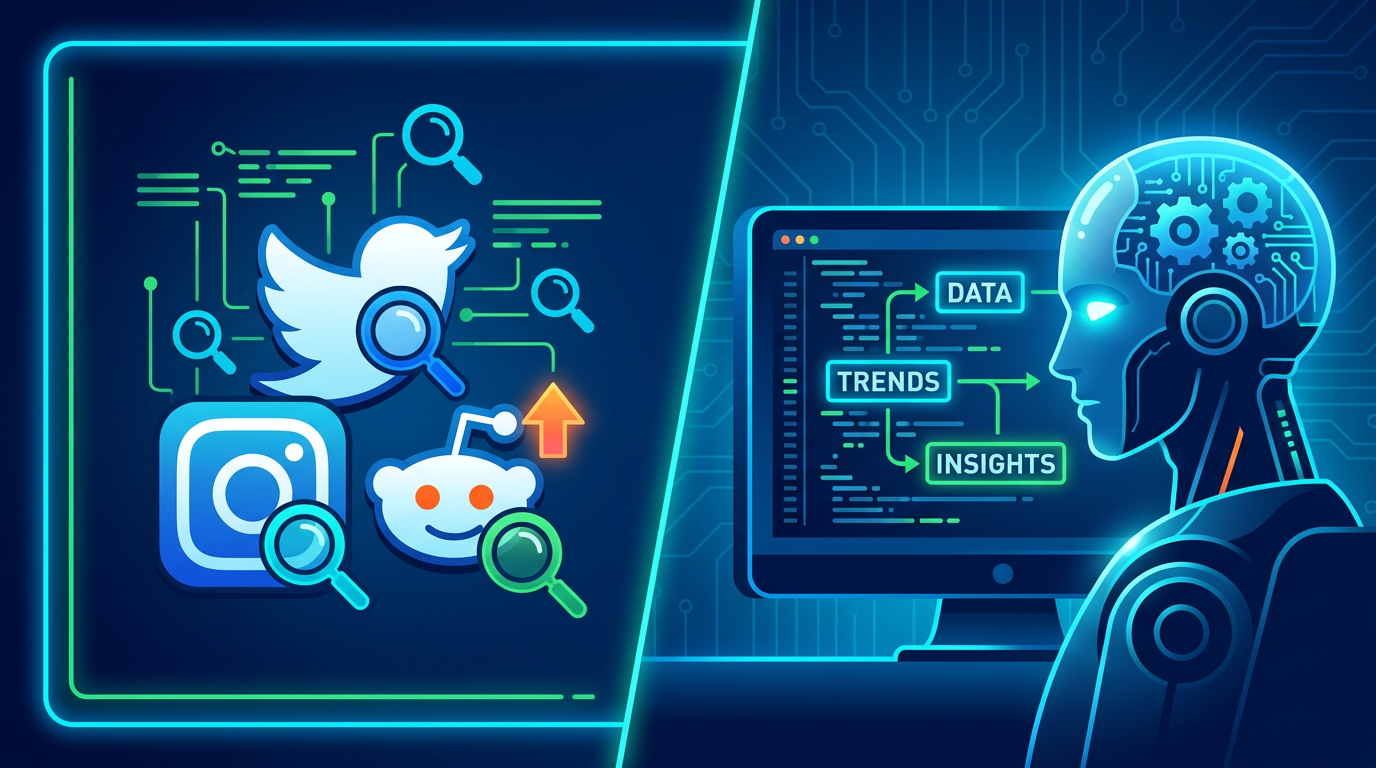
Can an AI agent monitor social media for you? Yes, and the working setup has two halves. Tracked items (your brand as a keyword, competitors as users, your category's subreddits, campaign hashtags) get collected continuously in the background by a data layer. An agent then reads that accumulating data on whatever cadence you choose and does what dashboards can't: classifies, summarizes, and tells you which three things need a human today.
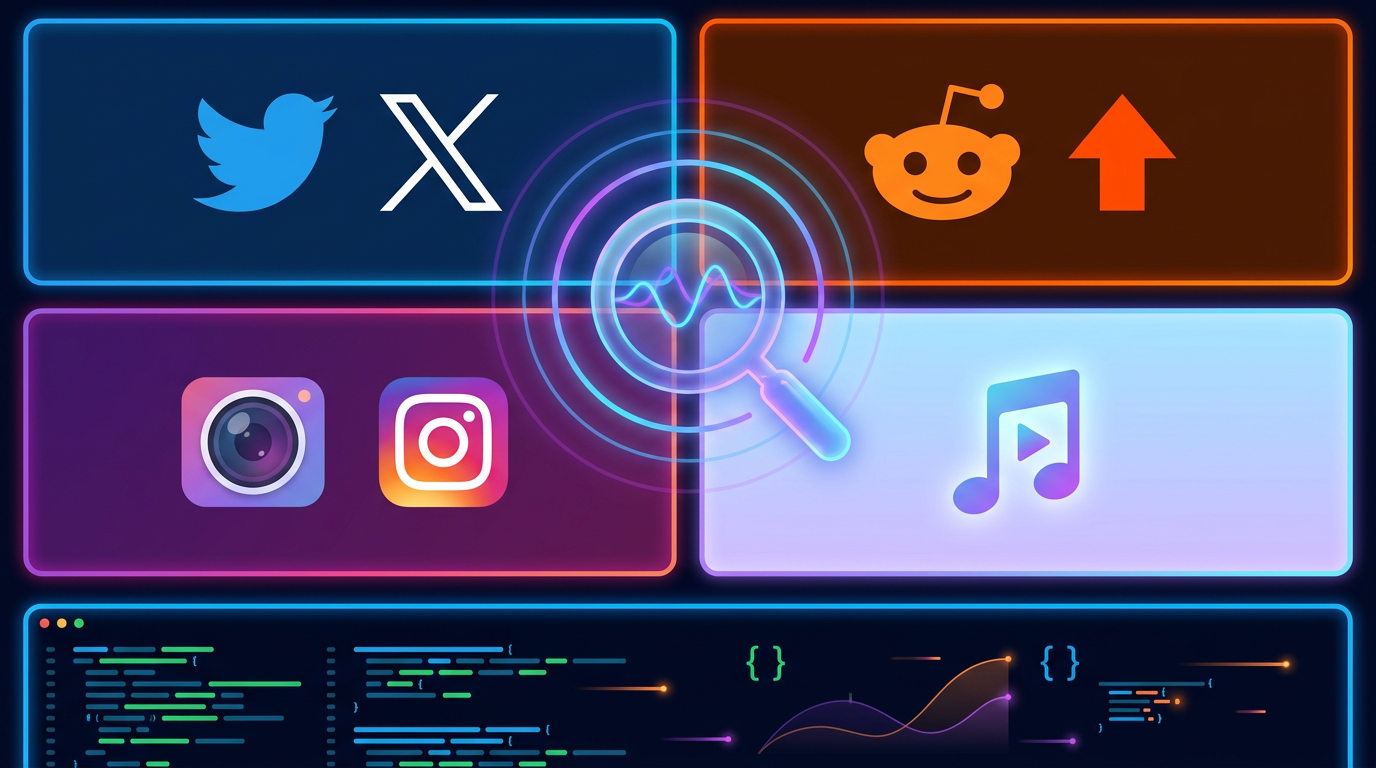
This tutorial builds that loop with xpoz-social-tracking, one skill from the open-source (MIT) skills collection we publish at Xpoz. The skill itself is a small instruction file; the tracking runs inside Xpoz, a hosted social data platform with an index of Twitter/X, Instagram, Reddit, and TikTok (billions of posts, free tier available). The skill gives your agent the vocabulary to set up, inspect, and change what's tracked from plain requests.
Why Tracking Beats Repeated Searching
A one-off search reads whatever the index holds at that moment. A tracked item changes the collection itself: the platform continuously gathers posts matching it in the background, so coverage gets deeper and fresher the longer the item is tracked. For monitoring, that difference compounds weekly. The brand keyword you track today is building the dataset your quarter-end review will read.
What can be tracked, by platform:
| Platform | Keyword | User | Subreddit | Hashtag |
|---|---|---|---|---|
| Twitter/X | Yes | Yes | No | No |
| Yes | Yes | No | No | |
| Yes | Yes | Yes | No | |
| TikTok | Yes | Yes | No | Yes |
A practical starter set for one brand: the brand name as a keyword on all four platforms, the two nearest competitors as tracked users, and the one subreddit where your category actually argues.
The Agent Loop
Tracking supplies complete data; the agent supplies judgment. The loop that teams converge on:
- Track the items once (setup below).
- Schedule a recurring agent run: daily for brand keywords, weekly for competitor and category items.
- Digest with judgment. The agent reads the window's tracked data and writes a short report: new mentions classified (praise, complaint, question, sales signal), themes versus last period, and an explicit "needs a human" list.
- Escalate on signal, not on noise: a volume spike, a high-engagement complaint, or a competitor announcement earns a same-day flag; routine chatter stays in the digest.
The ask that runs step 3 is one sentence: "Read this week's tracked mentions of [brand], classify them, compare to last week, and flag anything needing a response." Because the agent also has the other skills in the collection, the digest can borrow their methods, sentiment classification from the sentiment skill, buying-intent flags from the lead-scan skill, without extra setup.
Setup
Install the skill (Claude Code shown; the folder works in any SKILL.md-compatible agent):
git clone https://github.com/XPOZpublic/xpoz-agent-skills.git
cp -r xpoz-agent-skills/skills/xpoz-social-tracking ~/.claude/skills/
Connect data access via the remote MCP server (OAuth, no keys) or a free SDK key from xpoz.ai/get-token:
claude mcp add --transport http --scope user xpoz https://mcp.xpoz.ai/mcp
Then manage tracking conversationally:
"What am I currently tracking?"

"Track 'Acme Analytics' as a keyword on Twitter and Reddit,
and track r/dataengineering"

"Track #acmeanalytics on TikTok"

"Stop tracking the old campaign hashtag"
The skill checks available slots before adding items. Allowances scale by plan: 1 tracked keyword on the free tier, 3 on Pro ($20/month), 10 on Max ($200/month), with extra slots available as paid add-ons on Pro and Max. That constraint is a feature in practice: monitoring programs fail from tracking too much, not too little, and slot discipline forces the "what actually matters" conversation early.
Try this with Xpoz
No API keys needed. Query Twitter, Reddit, Instagram & TikTok with natural language.
Where Google Alerts Fits
Google Alerts remains the right free tool for watching the indexed web: news sites, blogs, press pickup. What it structurally misses is conversation inside social platforms, and it delivers links rather than analysis. The tracked-item loop watches the other territory, so the honest answer for most small teams is both: Alerts for the web, tracked items plus an agent for the social conversation. The full comparison, including paid middle grounds, is in Best Google Alerts Alternatives for Brand Monitoring.
FAQ
Can an AI agent monitor social media mentions for me?
Yes: tracked items collected continuously in the background, plus an agent that reads the data on a schedule and applies judgment, classifying mentions, summarizing themes, and flagging what needs a human.
How is this different from Google Alerts?
Google Alerts watches the indexed web and largely misses in-platform social conversation, delivering raw links. Tracked-item monitoring collects posts inside the four platforms, and the agent turns them into classified digests.
Is the monitoring real-time?
Collection runs continuously; the reading cadence is yours. A daily digest catches almost everything in useful time, and volume spikes are themselves escalation signals.
What can I track, and how much at once?
Keywords and users on all four platforms, subreddits on Reddit, hashtags on TikTok. The free tier includes 1 tracked keyword, Pro includes 3, Max includes 10, with paid extras available on Pro and Max.
Next Steps
- Alert design, what deserves interruption versus digest, is covered in Setting Up Effective Social Listening Alerts.
- The cross-platform mention-tracking method behind the digests: How to Track Brand Mentions Across Social Platforms.
- The full skills collection and install pattern: How to Add Social Media Skills to Your AI Agent.