
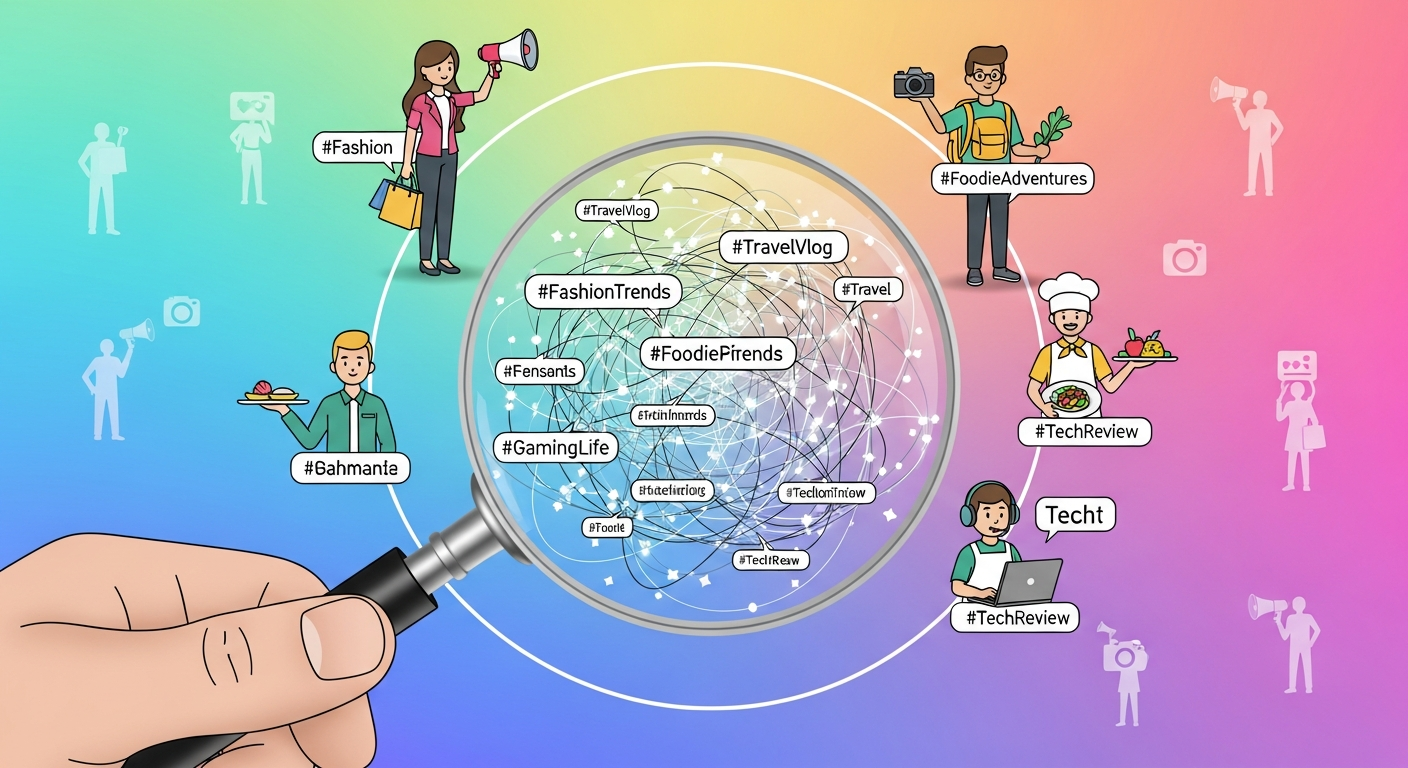
How to Find Micro-Influencers Using Topic Keywords
Finding the right micro-influencers for your brand used to mean endless scrolling, guesswork, and hoping you stumbled across someone whose audience actually aligned with your goals. Today, keyword-based influencer discovery has transformed this process from a needle-in-a-haystack search into a systematic, data-driven approach that surfaces exactly the voices you need.
Introduction
Micro-influencers—typically defined as creators with 10,000 to 100,000 followers—have become the secret weapon of modern marketing campaigns. Their engagement rates consistently outperform those of mega-influencers, often by 2-3x, and their audiences trust their recommendations more because they feel authentic rather than transactional.
But here's the challenge: there are millions of micro-influencers across Twitter and Instagram. Finding the ones who genuinely talk about topics relevant to your brand, have engaged audiences, and haven't already partnered with every competitor requires more than intuition. It requires data.
This tutorial walks through the strategic process of using keyword search to discover micro-influencers who are already creating content in your niche—people whose audiences are primed and ready for what you offer.
Why Keyword-Based Discovery Works
Traditional influencer discovery often starts with follower counts and works backward. You find accounts with impressive numbers, then hope their content aligns with your needs. This approach has a fundamental flaw: follower count tells you nothing about relevance.
Keyword search flips this logic. Instead of starting with vanity metrics, you begin with the conversations that matter to your business. You find people who are actively, consistently discussing topics your customers care about—and then evaluate whether their audience size and engagement make them viable partners.
The Signal in the Noise
When someone repeatedly posts about "sustainable packaging" or "home coffee brewing" or "B2B sales automation," they're signaling expertise and genuine interest. Their audience followed them because of this content. That alignment between creator passion and audience interest is what makes micro-influencer partnerships work.
Keyword-based discovery surfaces these signals at scale. Rather than manually reviewing thousands of profiles, you can identify everyone discussing your target topics and then filter by the metrics that matter for your campaign.
Defining Your Keyword Strategy
Before running any searches, you need a clear keyword framework. Random terms will produce random results. Strategic terms will surface your ideal partners.
Primary Topic Keywords
Start with the core concepts directly related to your product or service. If you sell meal prep containers, your primary keywords might include:
- "meal prep"
- "food prep Sunday"
- "batch cooking"
- "weekly meal planning"
These are the obvious, high-intent terms that indicate someone is deeply embedded in your space.
Adjacent Topic Keywords
Expand to topics your ideal customers also care about. Meal prep enthusiasts likely also discuss:
- "macro counting"
- "fitness nutrition"
- "clean eating"
- "budget groceries"
Adjacent keywords help you find influencers whose audiences overlap with your target market, even if they don't discuss your specific product category constantly.
Problem-Based Keywords
Think about the frustrations your product solves. People who complain about problems are often the same people who'd champion solutions:
- "tired of takeout"
- "no time to cook"
- "eating healthy on a budget"
Influencers who articulate these problems authentically can speak to solutions with credibility.
Brand and Competitor Keywords
Monitor who's already talking about your brand, your competitors, or your industry leaders. These people are already engaged with your space and may be open to partnerships.
Structuring Effective Search Queries
The difference between finding 50 mediocre results and 500 highly relevant ones often comes down to query construction. Boolean operators transform basic keyword searches into precision instruments.
Exact Phrase Matching
When you need posts containing a specific phrase rather than scattered words, wrap your terms in quotes:
"sustainable fashion"
This finds posts with that exact phrase, filtering out unrelated content that happens to contain both words separately.
OR Queries for Breadth
When multiple terms describe the same concept, combine them with OR:
"plant-based" OR vegan OR "meat-free"
This captures the full conversation regardless of which terminology creators prefer.
AND Queries for Precision
When you need posts that discuss multiple concepts together, use AND:
"home office" AND productivity
This finds people discussing workspace optimization specifically, not just home offices or productivity in isolation.
Complex Boolean Logic
Combine operators for sophisticated targeting:
("sustainable fashion" OR "ethical clothing") AND NOT "fast fashion"
This surfaces sustainability advocates who aren't just critiquing fast fashion but actively promoting alternatives.
From Keywords to People
Searching posts by keyword is useful, but the real power lies in translating post-level insights into user-level intelligence. When you search for users who have authored content matching your keywords, you get a deduplicated list of creators rather than a flood of individual posts.
This approach answers the essential question: "Who are the people consistently creating content about topics I care about?"
Evaluating Relevance Signals
When reviewing keyword-matched users, look beyond follower counts to engagement patterns:
Relevant Post Count: How many times has this person posted about your target topics? Someone with 3 matching posts over two years is less valuable than someone with 30 posts in six months.
Engagement on Relevant Content: Total engagement metrics tell part of the story, but engagement specifically on topic-relevant posts tells you whether their audience responds to this subject matter.
Content Consistency: Review their recent posts. Are your keywords a consistent theme, or did they mention your topic once and never again?
The Micro-Influencer Sweet Spot
For micro-influencer discovery specifically, you're filtering for accounts that balance reach with engagement. Look for:
- Follower counts between 10K-100K (adjustable based on your definition)
- Engagement rates above 2% on relevant content
- Regular posting cadence (at least weekly)
- Authentic voice rather than overtly promotional tone
How Xpoz Addresses This
Xpoz's getTwitterUsersByKeywords and getInstagramUsersByKeywords tools are purpose-built for keyword-based influencer discovery. Rather than searching posts and manually tracking authors, these tools return deduplicated user profiles of people who have created content matching your query.
Here's what a practical search looks like:
Query: "sustainable living" OR "zero waste"
Fields: username, name, followersCount, relevantTweetsCount, relevantTweetsLikesSum
This returns users who have posted about sustainable living, along with how many matching posts they've created and how much engagement those specific posts received. You're not guessing whether their audience cares about sustainability—you're seeing evidence of it.
The aggregation fields are particularly valuable for influencer vetting:
- relevantTweetsCount / relevantPostsCount: Indicates depth of involvement in your topic
- relevantTweetsLikesSum / relevantPostsLikesSum: Shows audience engagement with topic-specific content
- relevantTweetsImpressionsSum: Reveals actual reach of their relevant content (Twitter)
For Instagram specifically, getInstagramUsersByKeywords searches both captions and video subtitles, capturing spoken content from Reels that a text-only search would miss.
Pagination for Comprehensive Discovery
Topic searches often return hundreds or thousands of potential influencers. Xpoz handles this through server-side pagination, delivering results in manageable batches. You can also export complete datasets as CSV files for analysis in spreadsheets or data tools—essential when you're building a comprehensive influencer database rather than grabbing a few quick names.
Practical Examples
Example 1: Finding Fitness Micro-Influencers
A supplement brand wants to find fitness creators who focus on natural, science-based approaches rather than extreme dieting.
Query Strategy:
("evidence-based fitness" OR "science-based nutrition") AND NOT ("detox" OR "cleanse")
Filtering Criteria:
- 15K-75K followers
- At least 10 relevant posts
- High engagement on educational content
Result Analysis: Review the returned profiles for creators who teach rather than just motivate—people whose audiences come to learn, not just be inspired. These creators' endorsements carry weight because their followers trust their judgment on supplements and nutrition.
Example 2: Discovering B2B SaaS Voices
A project management software company wants to identify operations managers and productivity consultants who discuss workflow optimization.
Query Strategy:
"workflow automation" OR "process optimization" OR "operational efficiency"
Filtering Criteria:
- Active on Twitter (B2B conversations concentrate there)
- Strong engagement relative to follower count
- Professional bio indicating relevant experience
Result Analysis: Look for people who share practical advice and their own experiences with tools—not just general productivity tips. Their recommendations influence purchase decisions because they speak from implementation experience.
Example 3: Identifying Local Food Influencers
A restaurant chain expanding into new markets wants to find local food bloggers in specific cities.
Query Strategy:
"Austin food" OR "Austin restaurants" OR "Austin eats"
Additional Filtering:
- Review location fields to confirm local presence
- Check post history for consistent local coverage
- Verify engagement comes from geographically relevant audience
Result Analysis: Local micro-influencers often have highly engaged, geographically concentrated audiences—exactly what a restaurant needs. Their 15K followers in Austin are more valuable than a food blogger's 500K scattered globally.
Validating Your Discoveries
Keyword matching identifies candidates; validation confirms they're right for your campaign. Before reaching out, conduct due diligence:
Content Review
Read their recent posts. Do they align with your brand voice? Is there anything that could create controversy by association? Do they post frequently enough to deliver campaign value?
Audience Authentication
Use profile analysis tools to verify their followers aren't inflated by bots. Authentic engagement patterns (comments with substance, shares with added commentary) indicate real audiences.
Past Partnership History
Check whether they've worked with competitors or brands in adjacent categories. This isn't necessarily disqualifying—it may indicate they're experienced with partnerships—but it's useful context.
Engagement Quality
High engagement numbers with low-quality comments ("Nice!" "Fire!" "Love this!") can indicate engagement pods or purchased interactions. Look for substantive responses that indicate genuine audience interest.
Building an Ongoing Discovery Process
Influencer discovery isn't a one-time project. The landscape constantly evolves: new creators emerge, existing ones pivot their content focus, and audience preferences shift.
Monitor Emerging Voices
Set up recurring searches for your core keywords to identify new creators entering your space. Someone with 5K followers today who's producing excellent content could be at 50K in six months—getting in early builds authentic relationships before they're inundated with partnership requests.
Track Topic Evolution
The keywords that matter change over time. "Intermittent fasting" was niche five years ago; today it's mainstream. Staying attuned to emerging terminology helps you discover influencers before your competitors do.
Refresh Your Pipeline
Regularly re-run your discovery queries to catch creators you might have missed and remove those who've shifted focus. A quarterly refresh keeps your influencer database current and actionable.
Key Takeaways
-
Start with topics, not follower counts: Keyword-based discovery finds creators whose content already aligns with your brand, ensuring authentic partnership potential.
-
Use Boolean operators strategically: Exact phrases, OR combinations, AND requirements, and exclusions transform basic searches into precision tools.
-
Evaluate relevance depth: The number of on-topic posts and engagement specifically on relevant content matter more than overall metrics.
-
Validate before outreach: Content review, audience authentication, and engagement quality checks protect your brand and improve partnership success rates.
-
Make discovery ongoing: Regular searches surface emerging voices and keep your influencer pipeline fresh.
Conclusion
Keyword-based influencer discovery replaces the guesswork of traditional approaches with systematic, repeatable processes. By starting with the conversations that matter to your audience and working outward to the people leading those conversations, you identify partners whose recommendations will resonate because they're already trusted voices in exactly the spaces you want to reach.
The micro-influencers most valuable to your brand are out there, creating content about topics your customers care about. The question is whether you'll find them before your competitors do—and keyword search gives you the tools to make sure the answer is yes.