How to Map Influencer Networks on Twitter
Discovering who truly shapes conversations in your industry isn't about counting followers—it's about understanding the invisible web of relationships that determines whose voice actually carries weight. The most influential accounts often aren't the ones with millions of followers, but the ones whose content gets amplified by the right people at the right time.
Introduction
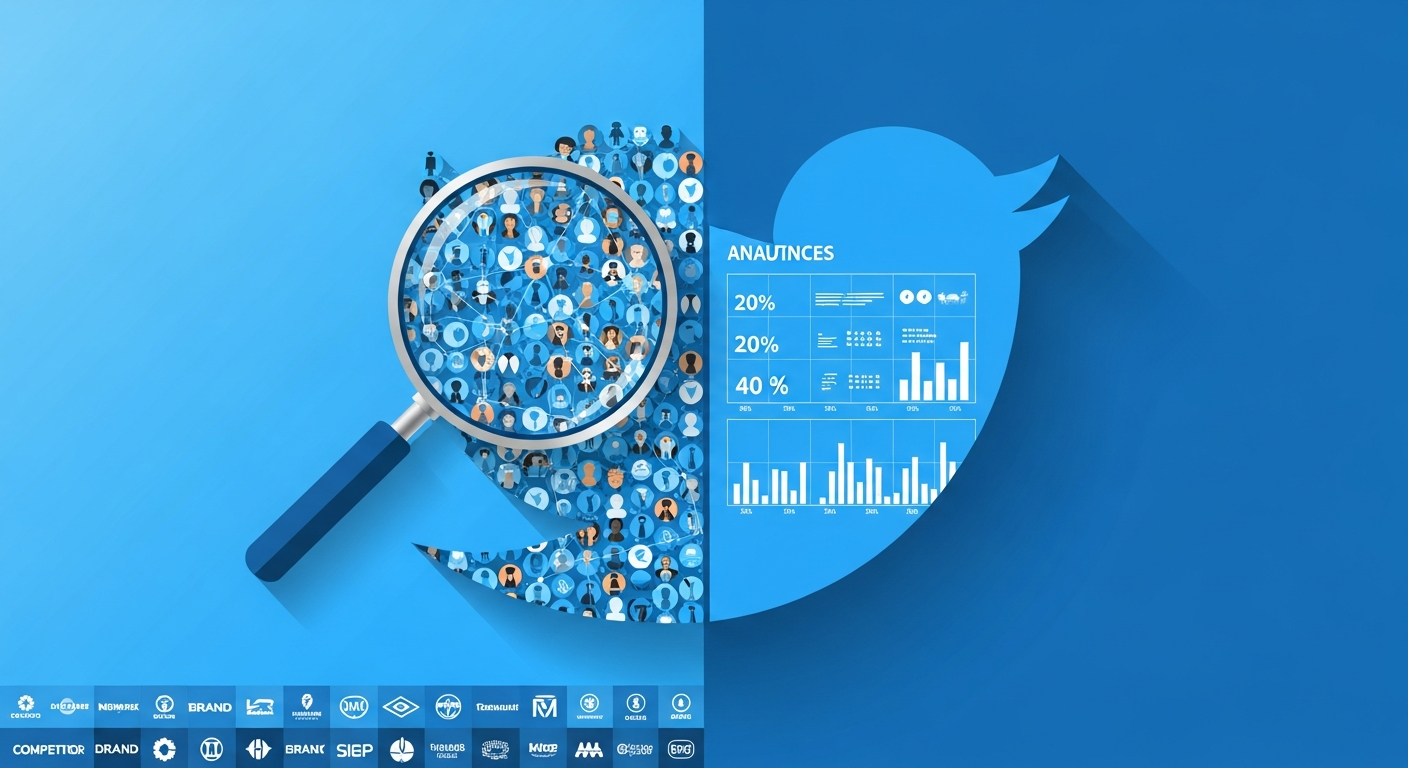
Mapping influencer networks on Twitter reveals something that raw metrics never will: the actual structure of influence in any topic or industry. When you understand not just who has followers, but who follows whom, who amplifies whose content, and which accounts sit at the intersection of multiple communities, you gain intelligence that transforms how you approach partnerships, content strategy, and competitive positioning.
The challenge? Twitter's native analytics barely scratch the surface. You can see your own followers and engagement, but understanding the broader network—the connections between accounts, the flow of information through communities, the hidden power brokers who bridge different audiences—requires systematic mapping that goes far beyond what the platform provides.
This guide walks through practical approaches to mapping influencer networks, from identifying seed accounts to tracing connection patterns to uncovering the structural relationships that define real influence.
Why Network Mapping Beats Follower Counts
Traditional influencer identification relies on surface metrics: follower count, engagement rate, verification status. These numbers tell you something, but they miss the deeper story.
Consider two accounts with 50,000 followers each. One accumulated followers through follow-back schemes and has an audience scattered across unrelated interests. The other has 50,000 followers who are all decision-makers in enterprise software, and those followers actively share and comment on their content. The second account has dramatically more influence within its domain—but you'd never know from the raw numbers.
Network mapping reveals:
- Bridge accounts that connect otherwise separate communities
- Amplification patterns showing whose content actually spreads
- Cluster density indicating tight-knit versus loose audiences
- Directional influence distinguishing who leads versus follows conversations
This structural understanding lets you identify accounts that punch far above their follower weight because of where they sit in the network topology.
Step 1: Identify Seed Accounts
Every network map starts with seed accounts—the initial set of profiles that anchor your analysis. Choosing these seeds well determines whether you map the right network or waste time on peripheral connections.
Finding Quality Seeds
Start by identifying accounts that genuinely participate in your target topic or industry. Keyword-based discovery helps here: finding users who consistently post about relevant subjects ensures you're starting with topically relevant accounts rather than general-purpose influencers who occasionally mention your space.
Look for accounts that:
- Consistently post original content (not just retweets)
- Generate substantive replies and discussions
- Have follower counts appropriate to their niche (micro-influencers in specialized fields, larger accounts in broader topics)
- Show authentic engagement patterns rather than bot-like activity
For a focused network map, 5-15 seed accounts usually provides enough starting points. More seeds risk pulling in too many tangential connections; fewer seeds may miss important clusters.
Validating Seed Quality
Before building outward from your seeds, verify they're genuinely influential in your target area. Check:
- Content consistency: Do they actually post about your topic regularly, or just occasionally?
- Engagement authenticity: Are their replies substantive, or mostly emoji reactions and generic praise?
- Follower relevance: Do their followers seem like real accounts interested in the subject matter?
- Account history: Have they been active long enough to have established genuine connections?
Authenticity scoring helps here—Twitter has significant bot and inauthentic account activity, and starting your map from compromised accounts will pollute your entire analysis.
Step 2: Trace Connection Patterns
With validated seed accounts in hand, the next phase maps the connections radiating out from them. This involves examining both who follows your seeds and who your seeds follow.
Following vs. Follower Analysis
These two directions reveal different things:
Who a seed follows tends to show who they consider authoritative or interesting. High-influence accounts are often selective about who they follow, so their following list can reveal hidden power players who don't have massive follower counts but command respect from those who matter.
Who follows a seed shows their audience reach. But more importantly, looking at the intersection—accounts that both follow and are followed by your seed—reveals reciprocal relationships that often indicate genuine professional connections rather than one-way fan relationships.
Identifying Network Clusters
As you trace connections from multiple seeds, you'll notice patterns. Some accounts appear repeatedly—they're followed by several of your seeds, or they follow multiple seeds. These are your cluster connectors.
Map these overlapping connections to identify:
- Core cluster members: Accounts connected to most or all seeds
- Bridge accounts: Connected to multiple distinct clusters but not central to any
- Peripheral accounts: Connected to only one seed, less central to the network
The most strategically valuable accounts are often bridges—they have access to multiple communities and can amplify content across network boundaries that other accounts can't cross.
Connection Depth
First-degree connections (direct followers/following) give you the immediate network. But second-degree connections—the followers of your followers—reveal the extended reach of any account.
An account with 10,000 followers whose followers themselves average 50,000 followers each has potential reach into a network of 500 million. An account with 10,000 followers whose followers average 500 followers each reaches a network one thousand times smaller.
This second-degree analysis helps identify accounts with hidden amplification potential.
Step 3: Analyze Engagement Patterns
Connections show potential influence; engagement shows actual influence. An account might have impressive connections but generate content nobody shares. Conversely, a less-connected account might produce content that consistently gets amplified across the network.
Tracking Amplification
For key posts from your identified influencers, trace who amplifies them:
- Retweets show direct amplification
- Quote tweets indicate engaged amplification with added commentary
- Replies from other influential accounts signal respect and attention
The accounts that consistently amplify content from multiple network members are often underrated power brokers. They might not create viral original content themselves, but their stamp of approval signals quality to their own followers.
Reciprocal vs. One-Way Engagement
Look for engagement patterns between accounts:
- Do certain accounts consistently reply to each other?
- Are there pairs or groups that regularly share each other's content?
- Which accounts receive engagement from others without reciprocating (potential thought leaders)?
- Which accounts engage heavily with others but receive little back (potential aspirants trying to break into the network)?
These patterns reveal the social dynamics within the network—alliances, hierarchies, and emerging relationships.
Step 4: Map Network Structure
With connection and engagement data gathered, you can now visualize and analyze the network structure.
Identifying Structural Positions
Different positions in a network carry different strategic value:
Hubs have many connections and often high follower counts. They're visible but not always the most influential—their attention is spread across many connections.
Authorities are accounts that hubs point to. They might have fewer total connections, but the connections they have are high-quality. Hubs follow them and share their content.
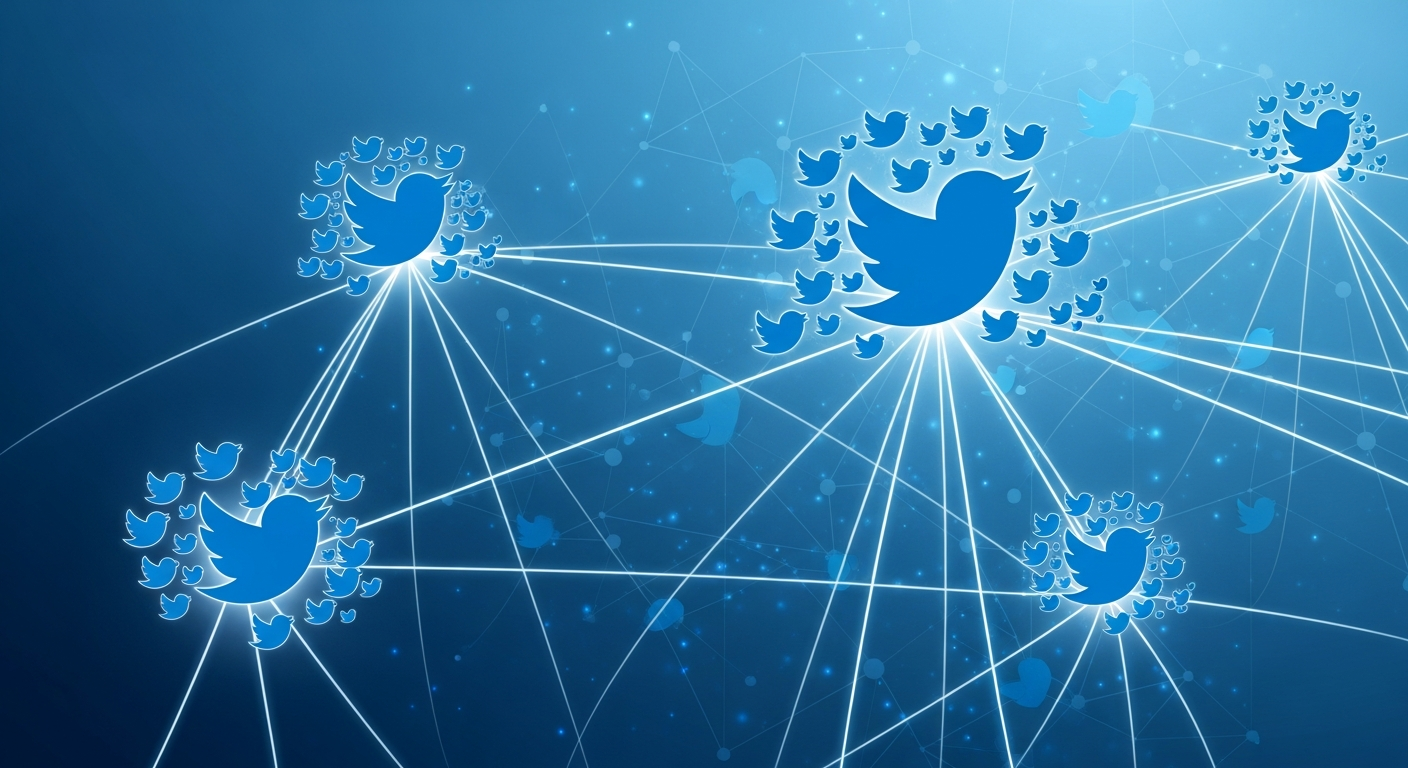
Bridges connect otherwise separate clusters. They're invaluable for cross-pollinating ideas between communities and often have disproportionate influence on how information flows.
Rising nodes show increasing connection density over time. These accounts are growing their network position and may become tomorrow's hubs or authorities.
Cluster Analysis
Most networks aren't uniform—they contain distinct clusters of densely connected accounts with sparser connections between clusters. Identifying these clusters reveals:
- Sub-communities within your broader target audience
- Topic specializations (e.g., within "AI," separate clusters for research, enterprise applications, ethics)
- Geographic or demographic groupings
- Professional role groupings (founders, investors, practitioners, journalists)
Understanding cluster structure helps you target influence efforts appropriately—a message that resonates in one cluster might fall flat in another.
How Xpoz Enables Network Mapping
Mapping influencer networks manually is theoretically possible but practically overwhelming. The data volumes involved—traversing thousands of follower relationships, analyzing engagement patterns across hundreds of posts, scoring authenticity for numerous accounts—exceed what any human can process efficiently.
Xpoz provides the infrastructure to execute this mapping systematically. The getTwitterUserConnections tool retrieves follower and following lists with pagination support for even the largest accounts, returning up to 1,000 users per page with essential fields like follower counts and descriptions. For mapping exercises, you can request specific fields relevant to influence analysis—verification status, engagement metrics, account creation dates.
The getTwitterUsersByKeywords tool helps identify seed accounts by finding users who actually post about relevant topics, with aggregation fields showing how much engagement their relevant content generates. This surfaces accounts with genuine topical authority rather than general-purpose accounts that occasionally mention your keywords.
For engagement analysis, getTwitterPostInteractingUsers reveals who actually amplifies specific content—the retweeters, quoters, and commenters who determine whether content spreads or dies. Combined with getTwitterPostsByAuthor for analyzing content patterns, you can trace how influence actually flows through the network.
Crucially for network integrity, Xpoz provides authenticity scoring fields including isInauthentic and isInauthenticProbScore. Filtering out bot accounts and inauthentic activity ensures your network map reflects real human influence rather than artificial amplification.
All of this operates through asynchronous operations with CSV export capability—meaning you can extract complete datasets for network visualization tools without being limited by pagination or API constraints.
Practical Applications
Partnership Identification
A B2B software company used network mapping to identify partnership targets. Rather than approaching the accounts with the most followers, they mapped the network around their target buyer persona and identified bridge accounts connecting the enterprise IT cluster with the digital transformation thought leadership cluster. These bridges—mostly industry analysts and boutique consultants—became their priority partnership targets because of their ability to credibly reach both audiences.
Content Strategy Refinement
A media brand mapped the influencer network around their coverage area and discovered two distinct clusters with minimal overlap: a practitioner cluster focused on tactical how-to content and a strategic cluster interested in trends and implications. They restructured their content calendar to serve both clusters rather than producing hybrid content that partially satisfied each.
Competitive Intelligence
A startup mapped not just their own industry network but their competitor's engagement network—who amplifies competitor content, who comments positively, who has reciprocal engagement relationships. This revealed accounts that appeared neutral but had strong competitor alignment, as well as genuinely independent voices who engaged with multiple players and might be open to relationship building.
Crisis Preparation
An organization mapped the network around their industry before any crisis occurred, identifying which accounts had the structural position to amplify negative narratives quickly. When a minor issue arose, they knew exactly which accounts to monitor closely and which bridge accounts could help contain spread through their network position.
Key Takeaways
- Follower counts mislead—network position and engagement patterns reveal actual influence more accurately than raw metrics
- Start with quality seeds—garbage in, garbage out applies strongly to network mapping; validate seed accounts before building outward
- Bridge accounts often matter most—accounts connecting separate clusters have disproportionate influence on information flow
- Engagement validates connections—static connection data shows potential while engagement patterns show actual influence in action
- Authenticity matters—filtering out inauthentic accounts prevents your analysis from being polluted by artificial activity
- Export and visualize—network analysis benefits enormously from visualization tools; extract complete datasets for proper graph analysis
Conclusion
Mapping influencer networks on Twitter transforms how you understand and engage with your target audiences. Instead of chasing follower counts or paying for celebrity endorsements, you can identify the accounts whose structural position gives them genuine influence over the conversations that matter to your organization.
The process requires systematic data gathering that exceeds manual capability, but the intelligence payoff justifies the investment. Whether you're planning influencer partnerships, refining content strategy, monitoring competitors, or preparing for potential crises, understanding network structure gives you an advantage that surface-level metrics never provide.
Start with a small seed set in your target domain, map connections and engagement patterns outward, identify the structural positions that matter, and build relationships with the accounts whose network position makes them genuinely influential—not just popular.