How to Track Competitors on Social Media with an AI Agent
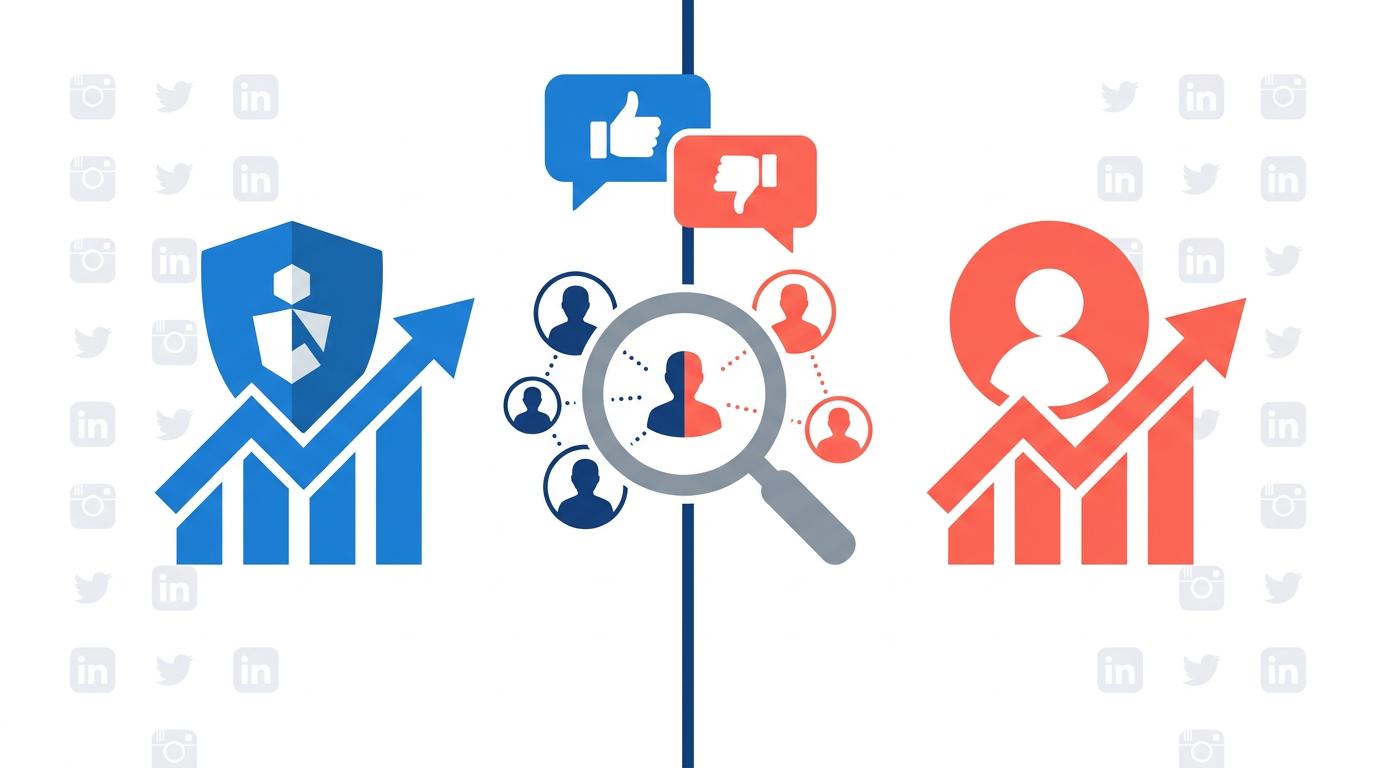
Competitor tracking on social media reduces to four measurable questions: who gets talked about more (share of voice), how the talk differs in tone (sentiment), whose content earns engagement, and which users discuss several brands at once, because those users are the ones actively comparing and switching. An AI agent with the right skill can answer all four in one run, from a single request like "compare us against [rival A] and [rival B] this week."
The skill in this tutorial is competitive-intel, part of our open-source agent skills collection at Xpoz. It reads public posts from the Xpoz index of Twitter/X, Reddit, and Instagram (billions of posts, free tier available) and encodes the comparison method below.
What a Comparison Run Measures
Share of voice is the headline number: each brand's mentions divided by the field's total, per platform. The formula is trivial; the value is in consistency, because a weekly SOV series turns "it feels like they're everywhere lately" into a trend line you can act on.
Sentiment per brand comes next, classified the same way for every brand so the comparison is fair: a score, a positive/neutral/negative split, and the direction of travel across the window. A competitor can out-mention you while trending negative, which is an opening, not a threat.
Engagement quality separates volume from resonance: average likes and replies per post, Reddit scores, impressions where available. A brand with fewer, heavier posts is winning a different game than a brand with many ignored ones, and the report says which game each player is in.
Audience overlap is the section teams read first once they discover it: the users who posted about more than one brand in the field. Those posts are where switching happens in public ("moving from X to Y because...") and where positioning language comes from, quoted in the users' own words.
Query Hygiene: The Unglamorous Part That Decides Accuracy
Brand names that double as ordinary words poison naive comparisons. "Slack" picks up "cut me some slack"; "Discord" picks up "sowing discord"; "Teams" picks up half of workplace English. The skill builds exclusion-anchored queries per brand ("Slack" NOT "cut some slack", "Microsoft Teams" OR "MS Teams") and applies the same discipline to tickers and product-line names. If a comparison ever looks too good or too strange, the query book is the first place to look, and the report keeps the queries visible for exactly that reason.
From One-Shot Runs to Continuous Tracking
A comparison run answers today's question. For a standing watch, the same data layer supports tracked keywords: register each competitor's name as a tracked item and the index collects matching posts continuously in the background, so next week's run reads from deeper, fresher coverage instead of starting cold. The setup for that loop, including scheduled digests, is covered in How to Set Up Continuous Social Media Monitoring with an AI Agent.
Try this with Xpoz
No API keys needed. Query Twitter, Reddit, Instagram & TikTok with natural language.
Setup and First Run
Install the skill (Claude Code shown; any SKILL.md-compatible agent reads the same folder):
git clone https://github.com/XPOZpublic/xpoz-agent-skills.git
cp -r xpoz-agent-skills/skills/competitive-intel ~/.claude/skills/
Connect data access once, via the remote MCP server (OAuth, no keys) or a free SDK key from xpoz.ai/get-token:
claude mcp add --transport http --scope user xpoz https://mcp.xpoz.ai/mcp
Then ask:
"Compare Notion vs Obsidian vs Roam on Reddit this month"

"Share of voice: Figma vs Sketch vs Adobe XD on Twitter"

"How does our sentiment compare to [competitor]'s this week?"

"Find users who posted about both us and [competitor],
and quote the comparisons"
The report lands as tables (SOV, sentiment, engagement) followed by qualitative sections: each brand's praised strengths and complained-about weaknesses with quotes, a positioning read of what each brand's audience associates it with, and the switching signals. Then you interrogate it: "expand the weaknesses section for brand B", "was the negative spike one event or a pattern?"
FAQ
What is share of voice and how is it calculated?
Your brand's mentions divided by total mentions across all compared brands, times 100, usually per platform. Tracked weekly, the trend matters more than the level.
Is it legal to track competitors on social media?
Analyzing public posts is standard competitive practice. These comparisons read only public content and quote it with attribution. Accessing private data or misrepresenting yourself is what crosses lines, and none of it is involved here.
How is an agent different from a competitive-intelligence dashboard?
Dashboards excel at continuous tracking with fixed panels; an agent excels at the questions between the panels, because the analysis continues conversationally. Many teams use both for different jobs.
How many competitors can I compare at once?
The skill is built for 2-5 brands per run. Larger fields work better as CSV exports analyzed locally; recurring fields work better as tracked keywords.
Next Steps
- Shopping for dedicated tooling instead? The market is compared in Best Tools for Tracking Competitors on Social Media.
- The strategy layer, what to do with the numbers, is in How to Analyze Competitor Social Media Strategy.
- The full skills collection and install pattern: How to Add Social Media Skills to Your AI Agent.