Social Media Data for iGaming Compliance and Affiliate Monitoring
A licensed gambling operator answers for marketing it never wrote. Under the UK Gambling Commission's LCCP social responsibility code 1.1.2, licensees are responsible for third parties acting on their behalf and must contract them to behave as if bound by the same licence conditions. Sweden, the Netherlands, Spain and New Jersey apply the same principle in their own terms. An affiliate's TikTok post is the operator's exposure.
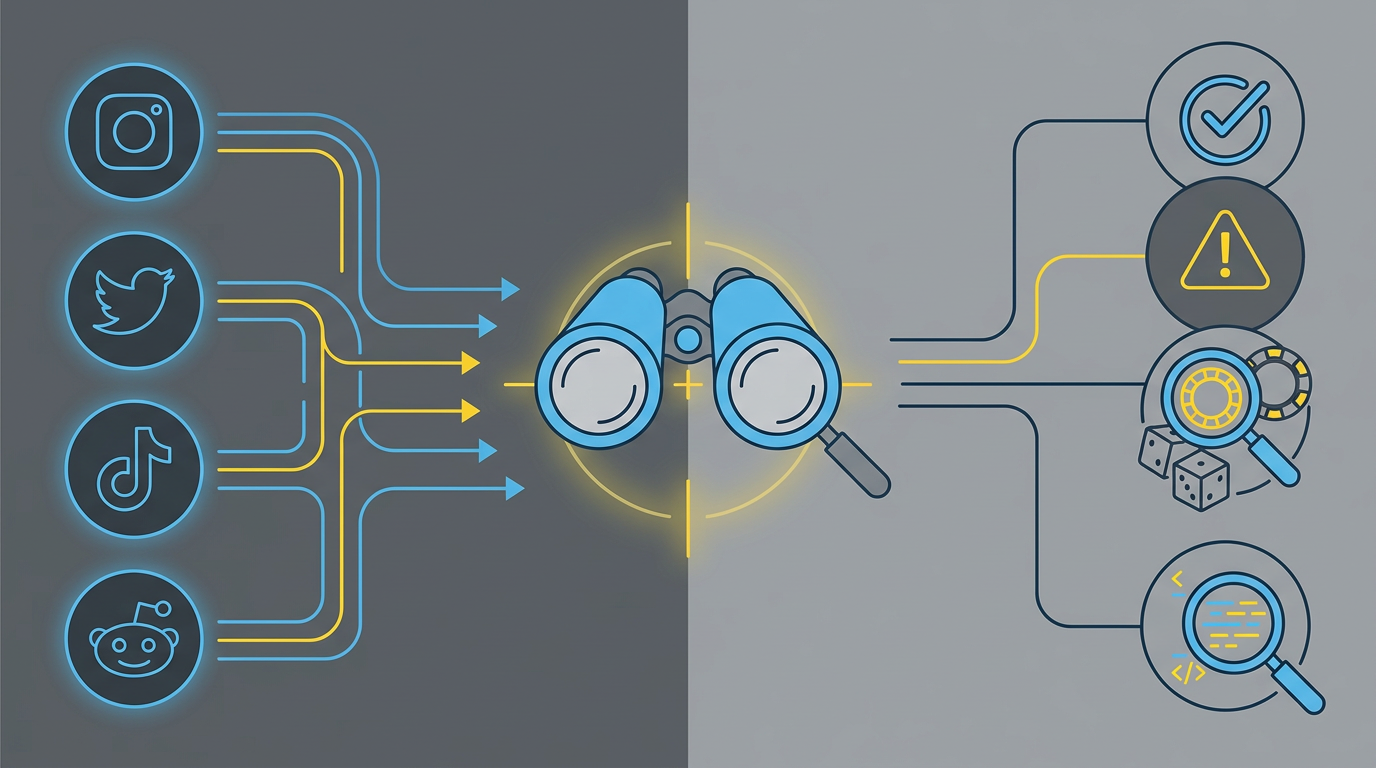
That exposure now sits on platforms with their own rules, watched by regulators with their own scanners. The UK's Advertising Standards Authority began actively monitoring gambling content on social media on 11 June 2026, and X banned compensated gambling partnerships in February 2026. This guide covers what regulators hold operators responsible for, how to monitor it across Twitter/X, Instagram, TikTok and Reddit, and how an AI agent can run the sweep.
We build xpoz, a social media intelligence platform that compliance and affiliate teams use for this kind of monitoring, so the workflow section describes our own tooling and is marked as such. The regulatory sections cite the rules and rulings directly, and every figure was checked against its source on 9 September 2026.
What Are Operators Responsible for on Social Media?
Regulators converge on four things: who is speaking for the brand, who the content reaches, what it claims, and where it is aimed. The rules below are the ones that generate enforcement, and each has a social media dimension that a monitoring program needs to cover.
| Obligation | What to monitor | Where it shows up | Evidence to keep |
|---|---|---|---|
| Third-party conduct (LCCP 1.1.2; Spelinspektionen; KSA) | Every post carrying the brand, a promo code or a tracking link | Affiliate accounts, creator posts, Reddit "best bonus" threads | Post URL, author, timestamp, text, engagement, screenshot or export |
| Strong appeal to under-18s (CAP Code 16.3.12) | Talent, characters, memes and youth-culture references in creator content | Instagram and TikTok posts by creators with large young followings | The post, the creator's audience profile, the date first seen |
| Under-25 talent (CAP Code 16.3.14) | Anyone gambling or playing a significant role who is or seems under 25 | Creator videos, affiliate reels | The post and the creator's stated age where public |
| Misleading bonus claims (responsible-gambling marketing rules in the UK, NJ and elsewhere) | "Free", "risk-free", "guaranteed" and bonus amounts without terms | Affiliate posts and comments, promo-code tweets | Text of the claim and the terms it omitted |
| Unlicensed-market promotion (KSA, DGOJ, MGCB) | Promotion reaching players in markets where the brand holds no licence, or promotion of unlicensed brands alongside yours | Affiliate sites' social accounts, Discord and Kick links, offshore promo posts | Geo signals in the post and account, the linked domain, dates |
The 2025 to 2026 enforcement record shows where this goes wrong. The ASA upheld complaints against Betway's Sir Lewis Hamilton ad (3 December 2025) and two Midnight posts on X featuring Son Heung-min (26 November 2025) and Trent Alexander-Arnold (17 September 2025), the last one using AI-generated imagery. A Betway Instagram post with Thierry Henry was not upheld (27 May 2026): retired for over a decade, a pundit, no significant under-18 following.
Why Is Social Media the Highest-Risk Channel?
Because it is where young people meet gambling marketing. The Gambling Commission's Young People and Gambling 2025 report (13 November 2025) found that 79 percent of 11 to 17 year olds had seen or heard gambling advertising, 56 percent on social media. Sixteen percent followed gambling companies or gambling content on social or streaming platforms, led by TikTok (11 percent), YouTube (9 percent), Instagram (6 percent) and Snapchat (6 percent).
Among those followers, 31 percent had seen gambling advertising from the influencers, creators or streamers they follow, rising to 49 percent of 16 year olds. Those numbers are why the ASA's enforcement notice to all UK gambling operators targets social media content marketing and why affiliate creator deals are the first thing a regulator asks about.
The regulators are now running their own monitoring. The ASA's Active Ad Monitoring System scans around 10,000 paid online ads by licensed gambling operators each month; in its review of nearly 400 Meta posts between August 2025 and March 2026, about 85 percent were compliant, 10 percent needed investigation and roughly 5 percent were taken forward for enforcement. From 11 June 2026, ads with strong appeal to under-18s must be amended or withdrawn on sight, with referral to the platform or the Gambling Commission for persistent breaches.
What Do Affiliate Fines Look Like in 2026?
The Dutch Kansspelautoriteit collected EUR 675,000 from the three companies behind CasinoScout.nl (SBM Holding Group, JEF Holdings and Sun Block Media Labs 2.0), EUR 225,000 each, in decisions signed on 17 July 2026 and published on 14 August 2026. The site had operated legally until it was sold on 10 January 2025, then began promoting unlicensed casinos and describing them as licensed. The KSA's position is that promoting participation in unlicensed gambling is itself illegal, separate from the offering.
Spain's DGOJ fined Make Money Now SA, the production company behind the reality channel Zona Gemelos, EUR 10,000 in 2026 (reduced to EUR 6,000 for early payment and prompt removal) for promoting an unlicensed operator through affiliate links and commercial communications on Instagram, Kick, X and Discord. In the United States, the Michigan Gaming Control Board issued cease-and-desist orders to 45 offshore operators in April 2026, and New Jersey requires revenue-share affiliates to hold an ancillary casino service industry enterprise licence.
The platforms moved too. X's updated Paid Partnerships Policy, effective 13 February 2026, removed gambling from every form of compensated creator content, including affiliate commissions, tracking links and ambassador deals; X Ads remain available with preauthorisation. An affiliate paying a creator to post a code on X is now breaching the platform's rules as well as, potentially, the operator's licence conditions.
Try this with Xpoz
No API keys needed. Query Twitter, Reddit, Instagram & TikTok with natural language.
How Do You Monitor Affiliates Across Four Platforms?
Start from a keyword set, not from a list of accounts. Affiliates you know are the easy part; the exposure comes from sub-affiliates, resold traffic and creators you have never contracted. The searchable fingerprints of your brand are its name and misspellings, every live promo and affiliate code, the tracking domains and short links in your affiliate program, and the bonus amounts and phrases affiliates copy from your own promotions.
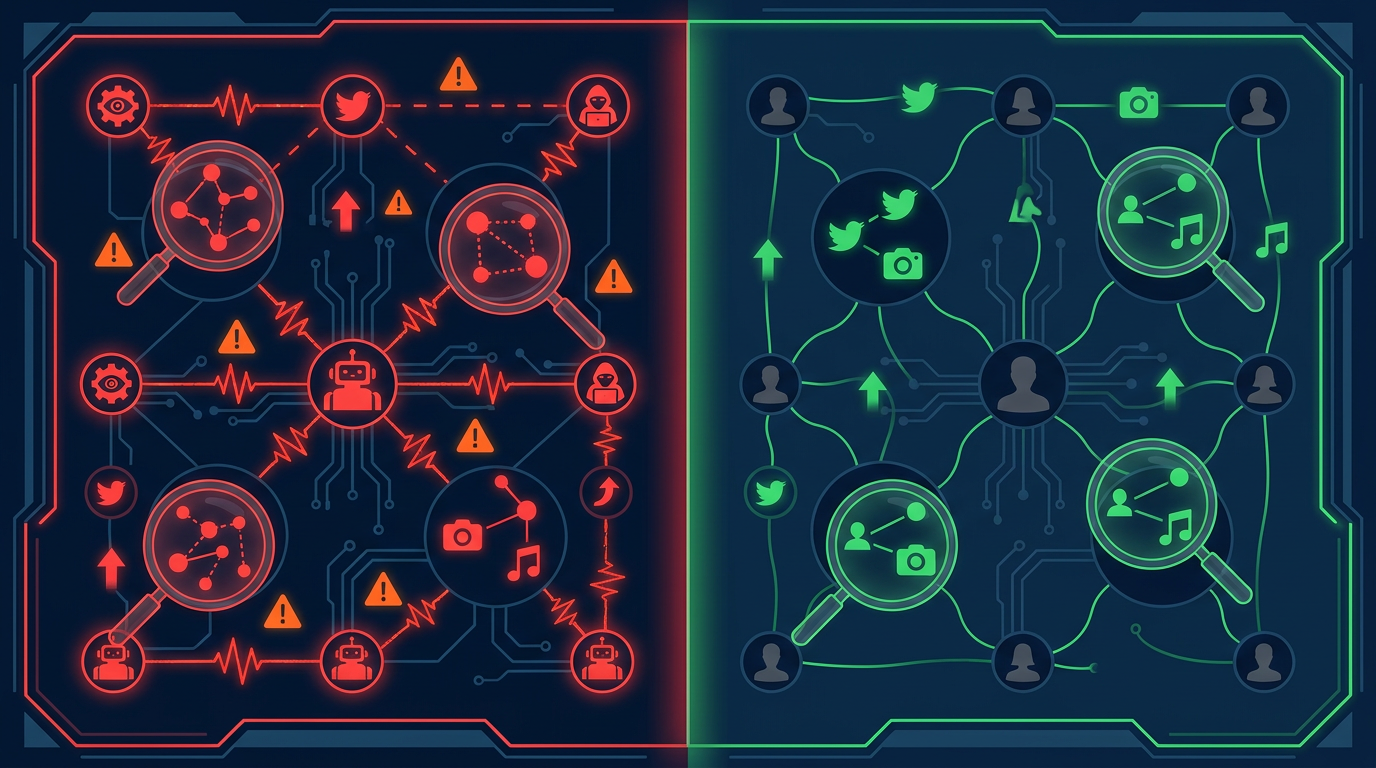
Each platform surfaces a different kind of risk. Twitter/X carries promo-code posts and tipster accounts, so keyword search on the codes and brand plus the posts of known tipsters catches most of it. Instagram and TikTok carry creator content, so search captions and subtitles for the brand and codes, then pull each creator's recent posts to read the audience and the age of the talent. Reddit carries "best bonus" and "does this code still work" threads, so search posts and comments and watch the subreddits where your market's players gather.
Run the same sweep on a fixed cadence and record the delta. A weekly sweep with the codes and brand terms as tracked keywords, plus the creators and affiliates you have contracted as tracked users, means new posts arrive without re-running discovery. For each hit, keep the post URL, author handle, timestamp, full text, engagement counts and the linked domain, then export the batch to CSV so the compliance file exists even after the post is deleted.
How Does xpoz Fit This Workflow?
xpoz indexes billions of public posts across Twitter/X, Instagram, TikTok and Reddit and exposes them through an MCP server for AI agents, a REST API, SDKs and a CLI. This is the part of the guide about our product, so read it with that in mind. A compliance analyst searches posts by keyword on each platform (captions and subtitles on Instagram and TikTok, posts and comments on Reddit), lists a creator's or affiliate's recent posts, reads the comments and interacting users under a post, and exports any result set to CSV.
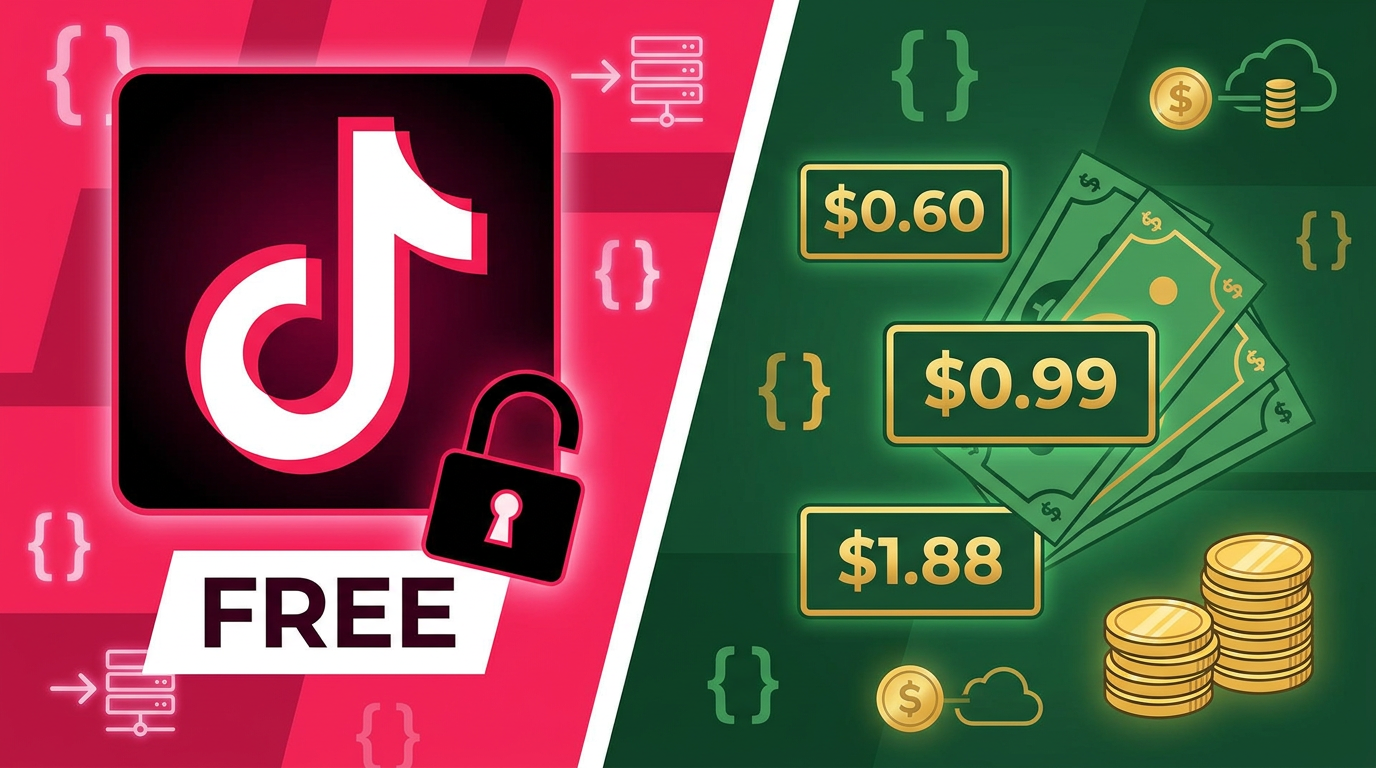
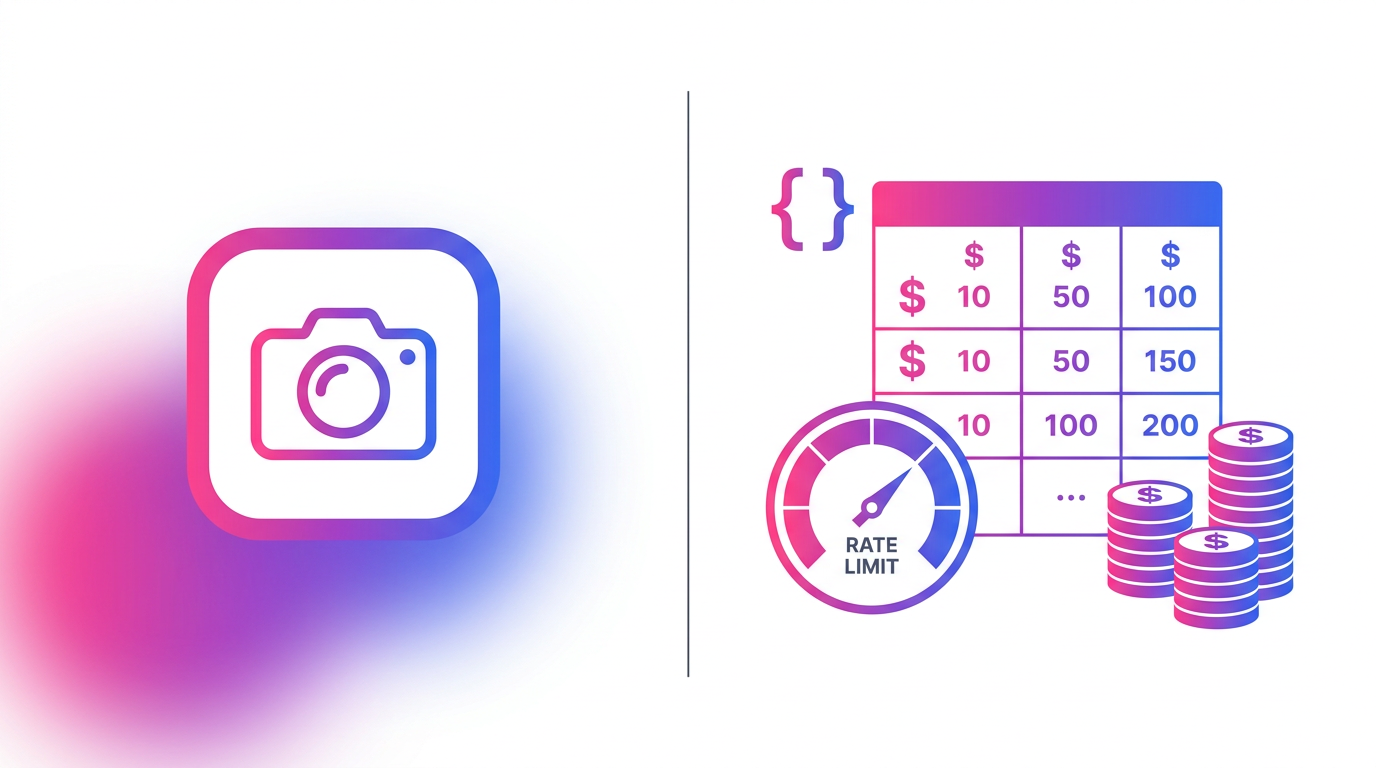
Tracked keywords and tracked users turn a one-off search into standing monitoring: the tracked items get fresher and deeper coverage on each refresh, and the index holds historical and recent data so a sweep can look back at what was posted before the complaint arrived. The Free tier is 500 one-time credits, Pro is $20 a month for 7,500 credits, and Max is $200 a month for 120,000 credits, with tracked-item allowances that grow by plan (1 on Free, 3 on Pro, 10 on Max). Credits are charged per query, not per result: 2 for Twitter/X or Reddit, 5 for TikTok and 12 for Instagram.
The evidence bundle is the same on every platform: URL, author, timestamp, text, counts and the export file. For the authentication steps a legal team will expect, see our guides on collecting social media evidence for legal cases and digital evidence authentication.
Can an AI Agent Run the Compliance Sweep?
Yes, and it is the shape this work is taking. Connect an agent (Claude, ChatGPT or a coded agent) to a social data source over MCP, give it the keyword set and the rule set in plain language, and ask for a dated exceptions report. The agent runs the searches, groups hits by affiliate and creator, flags posts that match a rule (a code with no terms, a creator who looks under 25, a link to a domain outside the licensed market), and writes the report. The human reviews the exceptions and decides what to escalate.
A workable rule set is short: strong appeal to under-18s (youth-culture references, characters, talent with large young followings), under-25 talent, bonus claims without terms, promotion of unlicensed brands or into unlicensed markets, and any post by an account the program has already terminated. Our tutorial on continuous social media monitoring with an AI agent shows the mechanics; the compliance version swaps brand-sentiment rules for these.
Two cautions. First, the agent surfaces and sorts; it does not decide, because "strong appeal" is a judgment regulators make on the whole context and the ASA's own rulings turn on details like a footballer's retirement date. Second, a creator's audience data is an estimate, so pair it with the follower-quality checks in our guide on detecting fake followers and bot accounts before drawing conclusions about who a post reached.
What Should the Weekly Compliance Report Contain?
Keep it to what a regulator would ask for. New posts carrying the brand or a code, by platform and by affiliate; posts flagged against each rule with the rule named; creators newly seen promoting the brand, with audience notes; codes and links seen in markets where the brand holds no licence; and the actions taken (takedown request, affiliate warning, termination) with dates. The cross-platform brand-mention tracking guide covers the general reporting structure this builds on.
The report is also the operator's defence. The Gambling Commission expects licensees to demonstrate knowledge, oversight and proactive interaction with third parties, and a dated record of sweeps, findings and actions is what that looks like on paper. An operator that finds the post before the regulator does, and can show it acted, is in a different position from one that learns about it from an enforcement notice.
Frequently Asked Questions
Are gambling operators responsible for what affiliates post on social media?
In most licensed markets, yes. The UK Gambling Commission's LCCP social responsibility code 1.1.2 makes licensees responsible for third parties acting on their behalf, Sweden's Spelinspektionen treats affiliate marketing as the licensee's own, and the Dutch KSA fines affiliate operators directly. Regulators expect the operator to know what is being published in its name and to act on it.
What should an iGaming compliance team monitor on social media?
Posts that carry the brand, its promo or affiliate codes, and its tracking links; creators paid by the brand or its affiliates; content with strong appeal to under-18s or people who appear under 25; bonus claims that omit terms; and promotion aimed at markets where the operator holds no licence. Monitoring covers Twitter/X, Instagram, TikTok and Reddit at minimum.
How do you monitor affiliate promo codes across platforms?
Search each platform for the codes, the brand name and its common misspellings, and the affiliate's tracking domains; save the results with post URL, author, timestamp, engagement and text; and re-run the search on a fixed cadence. Tracked keywords in a social data platform keep the sweep fresh, and CSV export gives compliance a record that survives deletion.
Can an AI agent run the compliance sweep?
Yes. An agent connected to a social data source over MCP can run the keyword and creator queries, compare each result against a written rule set (strong appeal, under-25 talent, missing terms, unlicensed market), and produce a dated exceptions report for a human to review. The human decides what to escalate; the agent does the searching and sorting.
Related Reading
- How to Track Brand Mentions Across Social Platforms
- How to Collect Social Media Evidence for Legal Cases
- Digital Evidence Authentication: A Guide for Legal Teams
- How to Set Up Continuous Social Media Monitoring with an AI Agent
- How to Detect Fake Followers and Bot Accounts
Sources
- UK Gambling Commission, Licensees' responsibilities for third parties (updated 8 November 2024)
- CAP Code, Section 16: Gambling, rules 16.3.12 and 16.3.14
- ASA, Enforcement Notice: Gambling ads with strong appeal to under-18s (monitoring from 11 June 2026) and Keeping gambling advertising responsible and protecting young people (27 May 2026)
- Gambling Commission, Young People and Gambling 2025 (13 November 2025)
- Gaming.net, Dutch regulator collects EUR 675,000 from CasinoScout owners (14 August 2026)
- iGaming Business, DGOJ fines production company for promoting unlicensed operator (2026)
- Casino Industry News, X policy update bans gambling influencer deals and affiliates (18 February 2026)
- Michigan Gaming Control Board, Cease-and-desist orders to 45 illegal offshore operators (7 April 2026)
- Ifrah Law, New Jersey DGE guidance for affiliate marketers
- Browne Jacobson, Why the ASA is showing gambling ads the red card (July 2026)